
Fire Line & Fire Main Repair
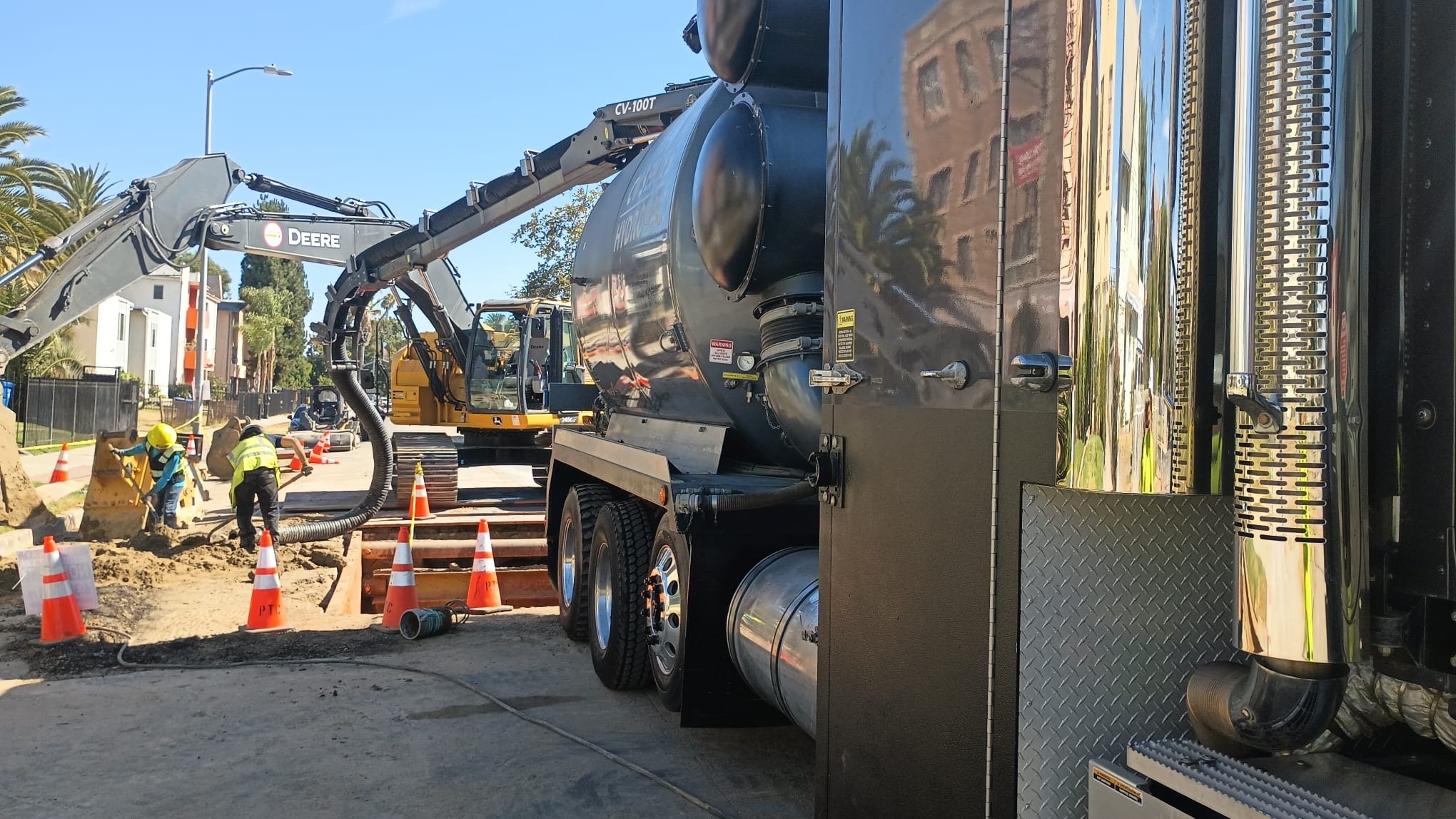
We repair underground fire service lines and fire mains on private property: leaks, breaks, failed joints and thrust blocks, valves, backflow assembly piping and hydrant laterals. We locate the leak, expose the line with our own hydrovac, plan the shutdown with you so the system is out for as little time as possible, make the repair, test it and restore the surface.
Who it's for
- Property managers and owners whose backflow detector meter is turning, whose water bill jumped, or who see water surfacing on the site
- Fire sprinkler contractors who found an underground problem during an inspection or test and need it repaired below grade
- General contractors whose fire line was hit or damaged during other site work
- Facility teams facing a fire marshal correction notice on the underground fire service
How the work goes
- Call us with what you see. A detector meter reading, a water bill, wet ground, a test failure or a correction notice. Photos help.
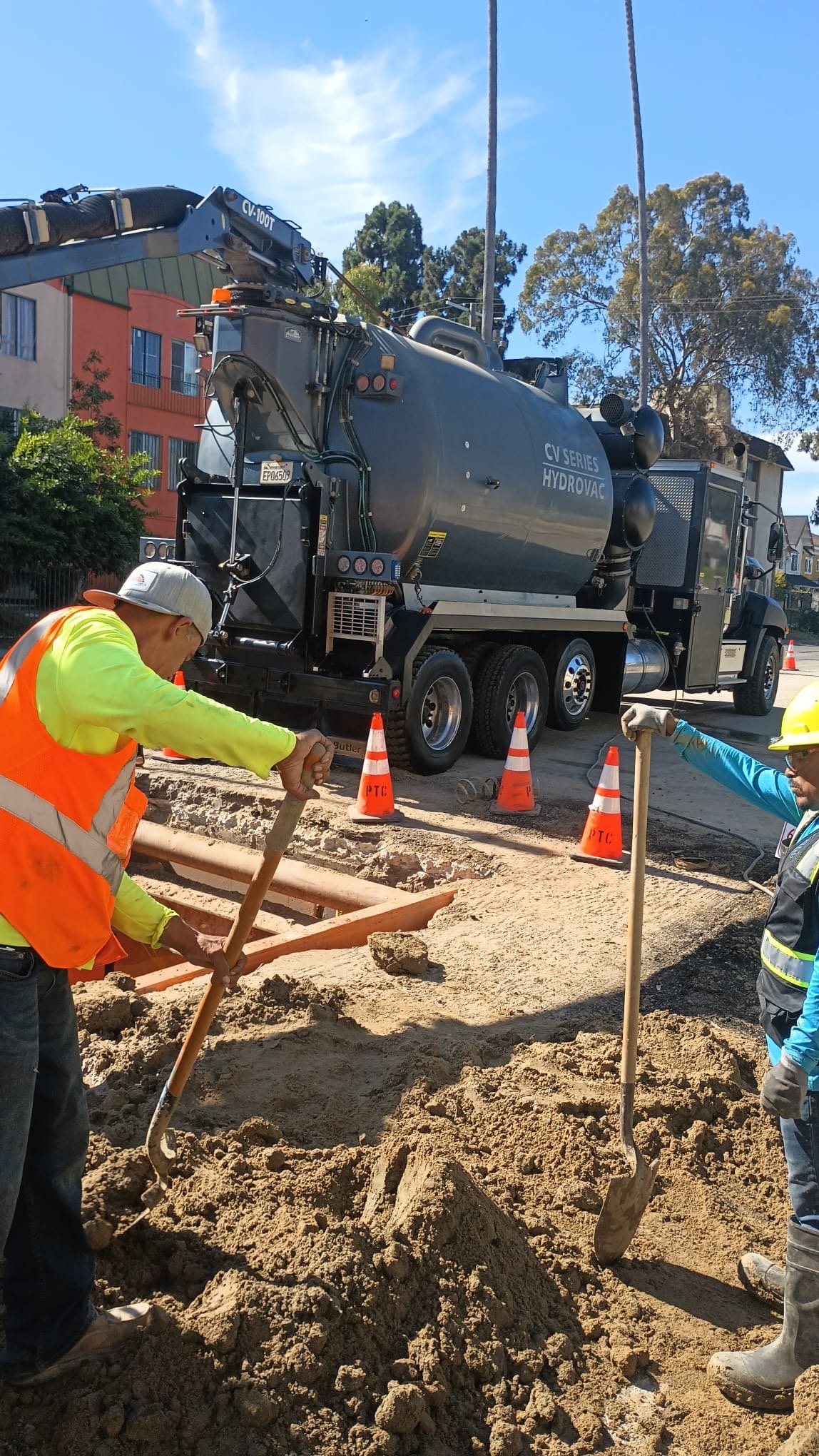
- Find the leak. We read the site, trace the line and expose it with our hydrovac to confirm the leak before we open more ground. Where it needs acoustic leak location, we bring in a leak-detection specialist.
- Plan the shutdown. We agree the time the system will be out of service with you, so you can notify the fire department, your alarm company and your insurer and arrange any fire watch the fire authority requires.
- Repair. We cut out the damaged section, replace pipe, fittings, valves or thrust blocks to match the system, and restrain the joints.
- Test and restore service. We pressure test the repair and flush the line as the fire authority requires, and put the system back in service.
- Put it back. Backfill, compact and restore the asphalt, concrete or landscape to match. Larger replacements get a written proposal first.
What drives the cost
- How quickly the leak can be located, and whether specialist leak detection is needed
- Pipe size, material and depth
- Surface to cut and restore: landscape, concrete, asphalt or a street
- Valves, fittings or thrust blocks that need replacing
- Testing and inspection the fire authority requires
- Permit and agency fees, which the owner pays directly
What we do differently
We find the leak, fix the line and restore the site, with the shutdown planned around you.
How fire line leaks show up
A fire service line is under pressure all the time, but nobody uses it day to day, so a leak can run for months before anyone notices. The usual signs:
- The detector meter is turning. The small bypass meter on a double check detector assembly records water moving through the fire line when nothing should be. Steady movement usually means a leak.
- The water bill jumped with no change in how the building uses water.
- Wet ground, a sinking patch or water in a valve box along the line's route.
- A failed test or a correction notice from an inspection.
Why the shutdown matters
While a fire line is shut down for repair, the building's sprinkler system is out of service. California's fire code requires the owner to notify the fire department, and when a system is out for more than 4 hours the fire authority can require a fire watch until it is back in service. So every hour the line is open costs money. We expose and confirm the leak before the shutdown, stage the pipe and fittings in advance, and plan the work to keep the system out of service for as short a time as we can.
What we repair
- Leaking or broken fire service pipe and failed joints
- Thrust blocks and joint restraint
- Underground valves, post indicator valve connections and valve boxes
- Underground piping at the backflow assembly and fire department connection
- Private hydrant laterals and hydrant connections
- Lines damaged by other trades during site work
Building a new service or replacing a whole run? See fire line and water main installation. Need to find the line first? See utility locating and potholing.
Where our work stops
We repair the underground from the water purveyor's connection to the building's riser. Sprinkler heads, overhead piping and anything inside the building belong to your fire sprinkler contractor, and the annual backflow test is done by a certified backflow tester. Fire watch and notifications are the owner's to arrange; we give you the shutdown window to plan around.
Put back to match
We saw-cut clean openings, backfill and compact, then restore the asphalt, concrete or landscape to match what was there. The goal is a site that looks like we were never there.
Licensed for the work
J.F. Prieto Engineering Construction, Inc., Lic. #525452, Class A General Engineering, Class B General Building and HAZ. We hold a Cal/OSHA annual trench and excavation permit, and every excavation is run by an OSHA-trained competent person. Private projects across Los Angeles, Orange and Ventura counties, from our office at 5180 Alhambra Ave., Los Angeles.
Common questions
How do I know if my fire line is leaking?
The most common sign is the detector meter on the backflow assembly turning when no water should be flowing. Other signs are a water bill that jumps with no change in use, wet or sinking ground along the line, or water standing in a valve box.
Will my sprinkler system be out of service during the repair?
Yes, while the line is shut down the system is out of service. The owner notifies the fire department, and if it is out for more than 4 hours the fire authority can require a fire watch. We confirm the leak and stage materials before the shutdown so the outage is as short as we can make it.
Who pays for the water lost through a fire line leak?
On private property, the line past the water purveyor's connection belongs to the owner, so water lost through it is usually billed to the owner. Once the repair is done, ask your purveyor whether it offers a leak adjustment and keep our repair record for that request.
Do you find the leak or only repair it?
Both. We trace the line and expose it with our hydrovac to confirm the leak before opening more ground. When a leak needs acoustic location, we bring in a leak-detection specialist and then make the repair.
Can you repair a leaking or broken fire line?
Yes. We locate and expose the line, repair or replace the damaged section, test it and restore the surface. Larger replacements get a written proposal first.
Who repaves the street or driveway after a fire line goes in?
We do. We backfill and compact, or use slurry where the agency requires it, then restore the asphalt, concrete, curb or landscape. In the street that means the agency's standard, including a T-cut repave where required.
From the field
Ready to talk about your project?
Send us the details and we will follow up with next steps, or call us directly.