
Utility Locating, Potholing & Solutions
We find buried lines, expose them with our own hydrovac and measure their depth, size and condition. Then we solve what you found: repair it, reroute it, relocate it or build around it, priced in writing. When we're done, we backfill and patch the site to match. One licensed crew from first locate to final patch.
Who it's for
- Engineers designing a storm drain, sewer or utility run who need real depths, sizes and inverts at the crossings before the design is final
- Architects and developers who need to know what's in the way of a foundation, caisson or ADU, and what it takes to clear it
- General contractors who need lines exposed ahead of a trench, footing or slab, and someone to fix conflicts without stopping the job
- Owners and property managers of homes, commercial buildings and industrial sites who have a problem to fix: a backed-up sewer, a leak, a broken drain, a damaged fire line or a line cut by another trade
How the work goes
- Tell us the goal. A depth for a design, a clearance, a conflict to clear or a problem to fix. We scope the visit around that, under a signed Service Agreement with time-and-material terms. If you need a ceiling, we agree an authorized amount and stop for your approval before we reach it.
- DigAlert first. We white-line the area and open an 811 ticket at least two working days ahead, then wait for every utility's response.
- Locate. We read the site first (cleanouts, vaults, meters, lids, old patch lines). Then a transmitter traces metal lines and tracer wire, and a camera with a sonde follows sewer and storm lines from the surface. Every line is painted and flagged.
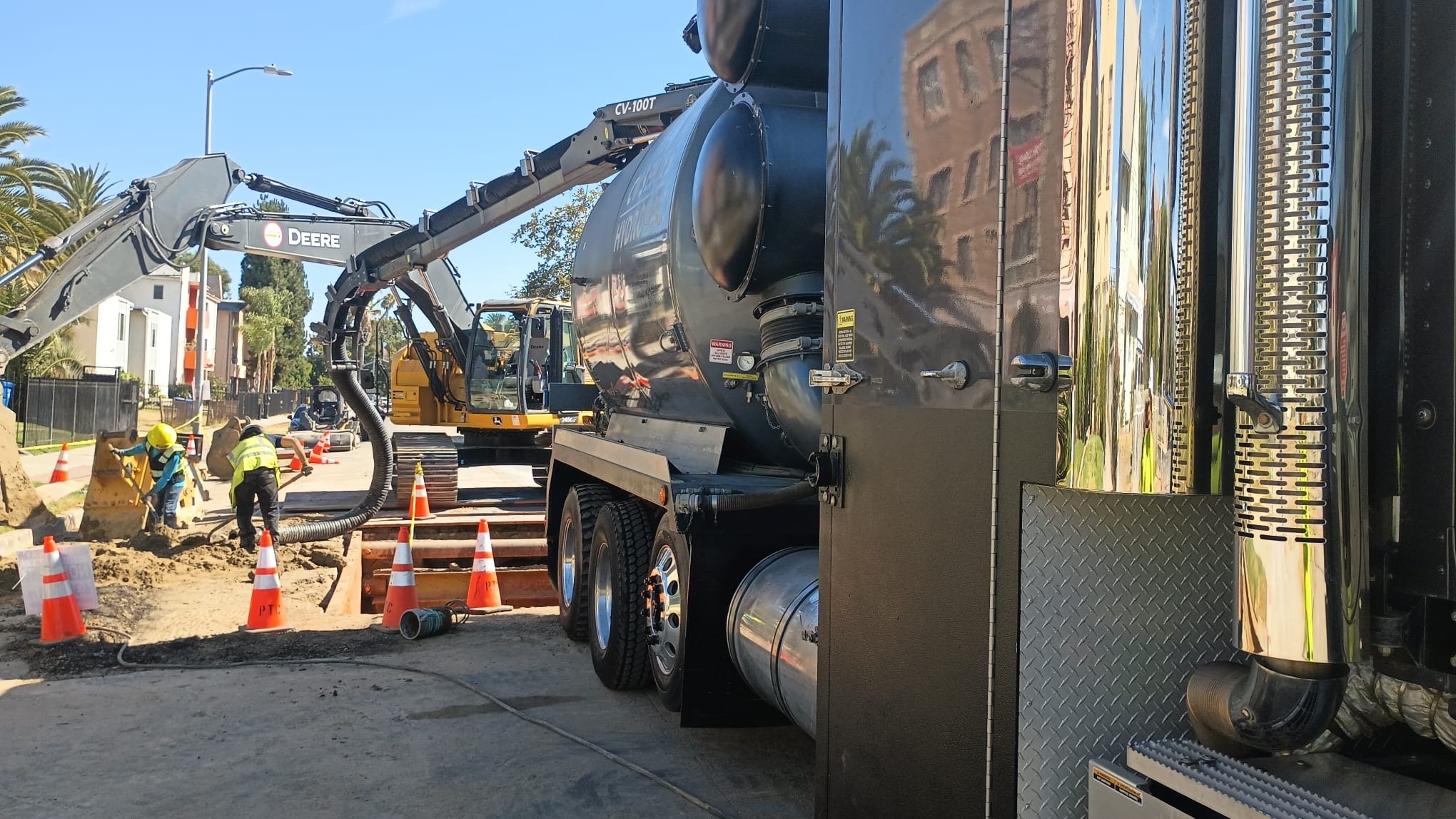
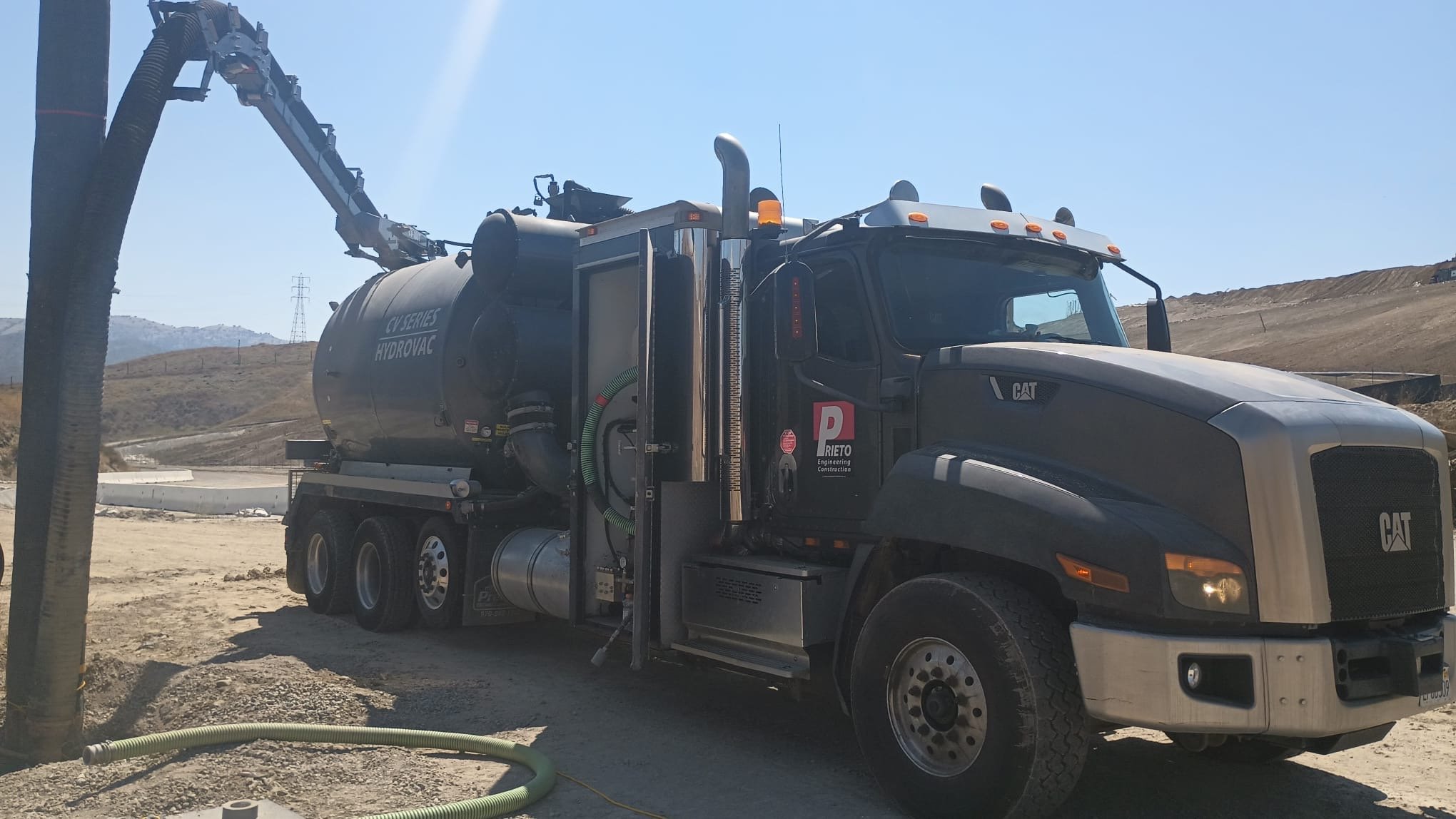
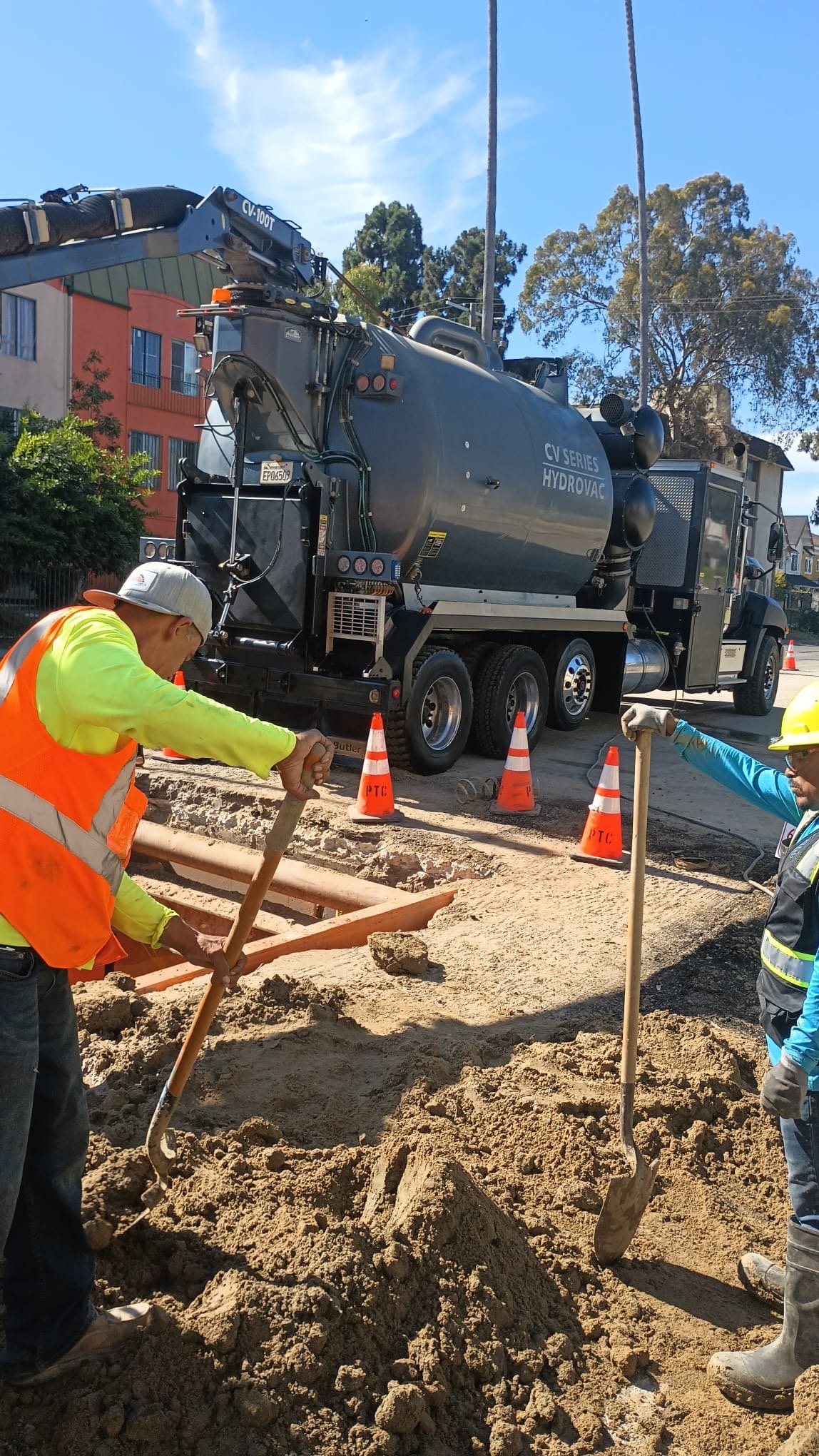
- Expose and measure. We saw-cut or core the surface and expose each line that matters with our hydrovac truck, digging by hand or vacuum within 24 inches of a marked utility. We record depth to top, size, material, condition and direction, with the tape in the photo.
- Solve it. We tell you what we found and what it means for your project, with options: repair in place, reroute, lower, relocate or build around it. Each option comes with what it takes and what it costs.
- Build the fix. Small repairs can happen the same visit once you approve them in writing. Larger work gets a written proposal. Where an option changes the design, the Engineer of Record approves it first.
- Put it back. We backfill, compact and patch the asphalt, concrete or landscape as the agreement lists, and haul away spoil that can't stay.
What drives the cost
- Hours on site, which depend on how many lines and test holes the goal needs
- Depth and soil, and whether the surface is lawn, asphalt or concrete
- The repair, reroute or relocation you choose, priced separately in writing
- The area to patch and the material it has to match
- Disposal of spoil, which is not billed when it can stay on site
- Travel, and traffic control if the work is in the street
- Permit and agency fees, which the owner pays directly to the agency
What we do differently
Most locators mark the ground and leave. We find it, solve it, price it, build it and put the site back.
Locating is the start. The solution is the job.
Nobody hires a locator just to see paint on the ground. You need a number for a design, a clear path for a building, or a problem fixed. Most locating companies mark the lines and leave, and the hydrovac company digs and leaves. Then someone else has to figure out what it means, price the fix and patch the holes.
We do all of it. The same licensed crew finds the line, measures it, works out how to deal with it, prices it, builds it and puts the site back. It's the super-sub approach applied to what's underground: one contractor, one point of contact, fewer handoffs.
What we solve
- Depths and crossings for design. Exposed and measured depth to top, size and material at every crossing, so the storm drain or sewer can be designed to real numbers.
- Conflicts in the way of building. A line under a footing, caisson or ADU pad. We show you what's there and what it takes to clear it.
- Relocating, rerouting or lowering a line. Sewer laterals and private sewer mains, storm drains, yard drains, water lines, fire lines and utility conduit moved out of the way, with the Engineer of Record approving any design change.
- Repairs to wet and dry lines. Lines that are cut, cracked, crushed, broken or leaking, fixed while we're already open once you approve it in writing. Wet lines: sewer laterals and private sewer mains, storm drains and yard drains, water lines and fire lines. Dry lines: conduit and duct for power, telecom and low voltage. Where a dry line carries live cable, the utility or your electrician handles the cable and we repair the conduit and the trench.
- Lines 811 doesn't mark. Power to garages, ADUs, gates and pools; site lighting; irrigation; gas to outbuildings; sewer laterals and storm drains; abandoned lines no plan shows.
We do this underground work anywhere on the property, on residential, commercial and industrial sites, from the street connection or meter to the building. Plumbing inside the building stays with your plumber.
What 811 marks, and what it doesn't
Calling 811 (DigAlert in Southern California) is required before digging, and it costs you nothing. But utilities mark only the lines they own, usually up to the meter or service point. Everything past that point belongs to the owner, and California's 811 law leaves out gravity sewer and storm drain lines. Those are the lines we find.
Why we expose the line instead of guessing
Instruments tell you where a line probably is. A pothole shows you. On the small and mid-size sites we work on, lines cross, share trenches and change depth, so when it matters we confirm each one physically and put a tape on it. An electronic locator can't see plastic pipe without a tracer wire, a sonde goes only as far as the camera can travel, and instrument depths are estimates. Some lines can't be found without more digging, so we tell you plainly what we could and couldn't confirm.
What you get
- Lines painted and flagged on site
- A photo of every exposed line with the tape in the frame
- A table of depth to top, size, material and condition at each test hole
- A marked-up site sketch with tape-measured offsets to fixed features
- Options for each conflict or problem, with a written price
- Photos of the backfill and patch
This is a contractor's field record and proposal. It is not a land survey or an engineering report.
For engineers and surveyors
We are a licensed contractor, not an engineering firm. We do the vacuum excavation and field measurement that an ASCE 38-22 Quality Level A investigation calls for, and your engineer or surveyor assigns the quality level. Where a design has to change, we bring constructible options as the contractor's means and methods, and the Engineer of Record decides.
Put back to match
We saw-cut or core clean openings so the patch is small. Then we backfill, compact and patch the asphalt, concrete or landscape to match what was there, as the Service Agreement lists. The goal is a site that looks like we were never there.
Licensed and permitted
J.F. Prieto Engineering Construction, Inc., Lic. #525452, Class A General Engineering, Class B General Building and HAZ. We hold a Cal/OSHA annual trench and excavation permit, and every excavation is run by a foreman who is an OSHA-trained competent person. Private projects across Los Angeles, Orange and Ventura counties, from our office at 5180 Alhambra Ave., Los Angeles.
Common questions
Can you relocate a sewer line or storm drain that's in the way?
Yes. Once the line is exposed and measured, we price the options: lower it, reroute it, relocate it or build around it. We build the option you choose, with the Engineer of Record approving any change to the design, then backfill and patch the site to match.
Can you price the fix after you locate the problem?
Yes. That is the point of hiring one crew. After we locate and expose the line, we tell you what we found and send a written price for the repair, reroute or relocation. Small repairs can be done the same visit once you approve them in writing.
Does 811 (DigAlert) mark private utility lines?
No. Utilities mark only the lines they own, usually up to the meter or service point. Lines past that point, such as power to a garage or ADU, site lighting, irrigation and gas to outbuildings, belong to the owner. They need a private locate before anyone digs.
Does 811 mark sewer laterals and storm drains?
Usually not. California's 811 law leaves gravity sewer and storm drain lines out of what utilities must mark, and the sewer lateral from the house to the main belongs to the owner. We trace these lines with a camera and sonde, then confirm them by potholing where it matters.
What is the difference between locating and potholing?
Locating finds a line's path from the surface with instruments and marks it with paint and flags. Potholing digs a small hole, usually with a hydrovac truck, to expose the line so its real depth, size and material can be measured. We do both, then backfill and patch.
How deep is the line? Can you tell me without digging?
An instrument gives an estimated depth, and 811 marks don't show depth at all. The only measured depth comes from exposing the line. We pothole it, put a tape on it and photograph the reading, so you know the real depth before you trench, drill or pour.
Can you find plastic (PVC) pipe?
Only with help. An electronic locator can't see plastic pipe unless it has a tracer wire. For sewer and drain lines, we push a camera with a sonde through the pipe and follow it from the surface. For other plastic lines, potholing at the likely path is the reliable way.
Do you use ground-penetrating radar?
No. On the small and mid-size sites we work, we confirm lines physically. We trace with electronic locators and a camera sonde, then expose the line by hydrovac and measure it. Where lines cross or crowd a trench, seeing the pipe beats reading a radar image.
Do you patch the asphalt or concrete after potholing?
Yes, when it's in the Service Agreement. We saw-cut or core a clean opening, then backfill, compact and patch the asphalt or concrete so you don't need a second contractor. Restoration is listed in writing before we start, so you know what will be put back.
Can you repair a broken line you find while locating?
Yes. Our crew is already on site with the equipment, so a cracked sewer lateral, broken storm drain, crushed conduit or leaking water line anywhere on the property can be repaired in the same visit once you approve it in writing. Bigger repairs get a written proposal first.
Are you an engineering or SUE firm? Can you provide Quality Level A?
No. We are a licensed contractor, not an engineering firm. We do the vacuum excavation and field measurements a Quality Level A investigation needs, with photos and tape-measured depths. Your engineer or surveyor assigns and certifies the quality level under ASCE 38-22.
How long is a DigAlert ticket good for?
A DigAlert ticket is valid for 28 days, and it has to be renewed before then if the work continues. Notice is required at least two working days, and no more than 14 calendar days, before digging. We open and renew the ticket as the excavator on our jobs.
From the field
Ready to talk about your project?
Send us the details and we will follow up with next steps, or call us directly.