Septic to Sewer Conversion
We help you decide whether to convert or stay on septic, then do the conversion with our own crew: locating and mapping the old system, the new lateral and connection, the street work, and the safe abandonment of every tank and seepage pit. Where a main has to be extended, licensed civil engineers prepare the plans and we build to them. Your expediter files the permits and submittals, or we file them when needed.
Who it's for
- Owners on septic whose system is failing within 200 feet of a public sewer
- Owners adding on or building an ADU where the County or City requires a sewer connection
- Fire rebuilds deciding between reusing the septic and connecting
- Neighborhoods where a sewer main is being extended
- Builders who need the sewer connection handled as one scope
How the work goes
- Decide first. We check where the nearest public sewer is, how deep, and whether there is a stub, and walk you through converting versus repairing or expanding the septic.
- Locate and map. Older lots often have tanks, pits and lines no one has seen in years. We find every one first, because each has to be abandoned, and so the house drain is bypassed at the right point. If we find an extra pit, abandoning it is an additional work order.
- Permits. Sewer connection, tap and saddle, road excavation and treatment permits as the agency requires. Where a main extension is needed, licensed civil engineers prepare the plans. Your expediter files the permits and submittals, or we file them when needed.
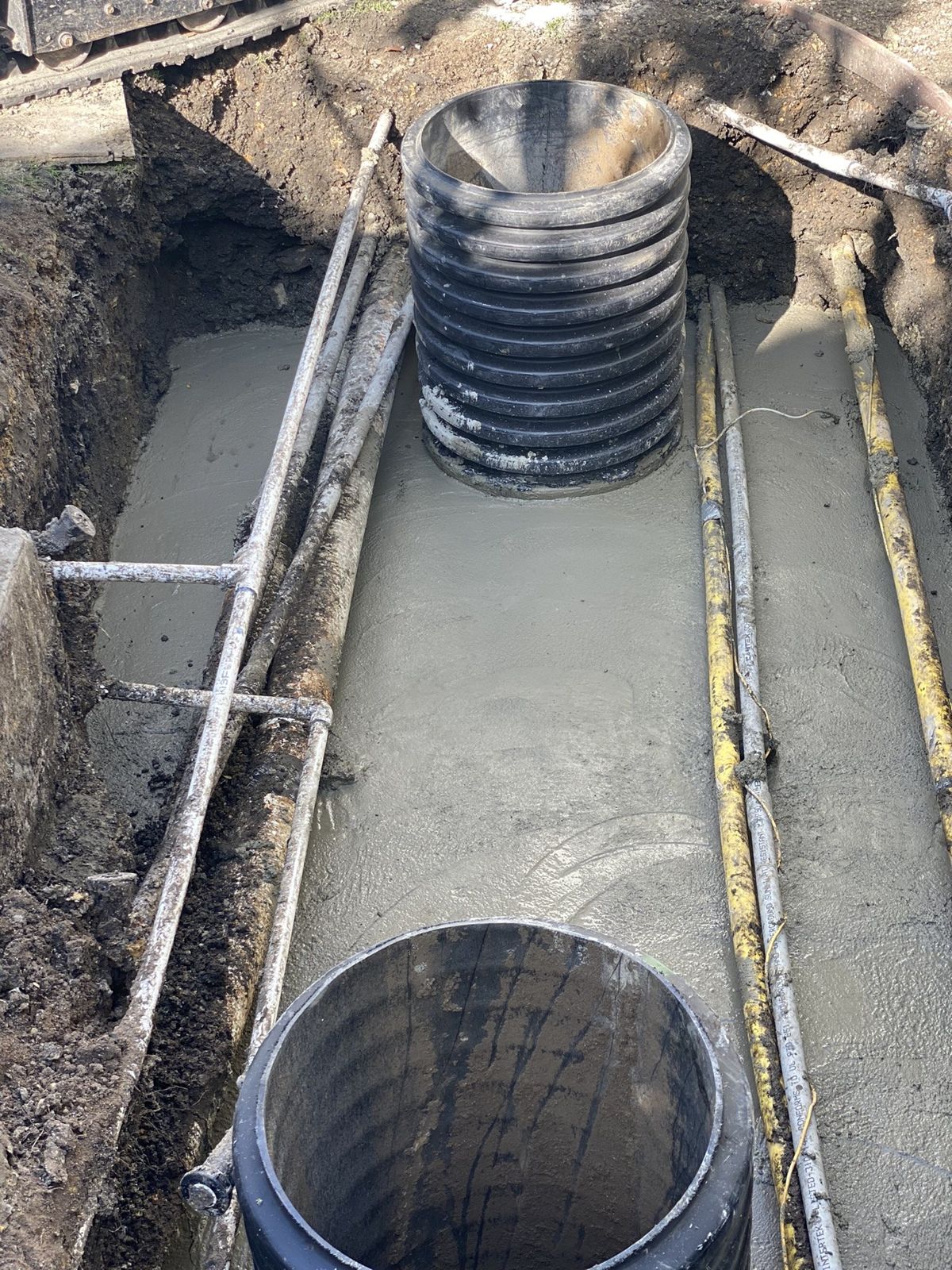
- Build. Our crew installs the new line from the house plumbing to the main, with the lateral and connection, does the street work with shoring and traffic control, and restores the pavement.
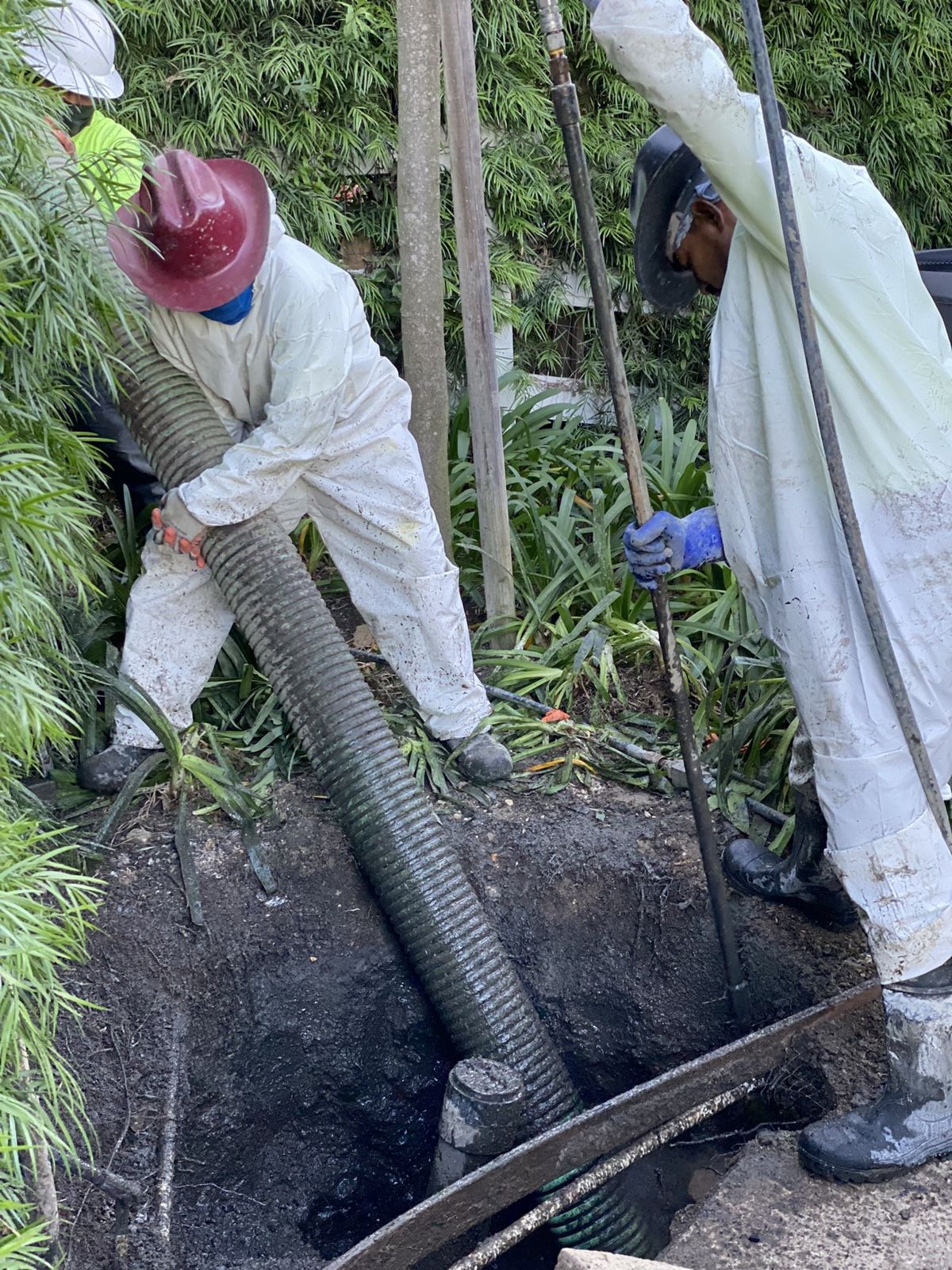
- Abandon safely. Every tank, cesspool and seepage pit is pumped, broken down and filled under inspection, so no one can fall into it later.
What drives the cost
- Distance and depth to the connection, and what the line runs under
- Whether there is a stub, or a tap and saddle is needed
- Street work, shoring and pavement restoration
- Agency connection, treatment and sewer facilities charges, paid by the owner
- When the main must be extended: civil engineering, manholes, bonds, fees and review time
- How many tanks and pits must be abandoned
What we do differently
One Class A contractor for the whole job: locating, lateral, street work and abandonment. We tell you when staying on septic is the better answer.
CA Lic. #525452 · Class A + B + Haz
Related: Sewer Lateral Repair and Installation, Utility Locating, Potholing & Solutions and Septic to Sewer Conversion in LA County: Should You Convert, and What It Really Takes.
Common questions
Should I keep my septic system or connect to the sewer?
It comes down to the cost of connecting versus keeping a system that works. If a lateral already reaches your property line, sewer can make sense. If it takes manholes and hundreds of feet of new sewer line, keeping a right-sized system and modernizing it with ORCA is often the better value. We lay out both paths so you can compare.
How long does a septic-to-sewer conversion take? Is the street cut included?
It depends on the agency, where the sewer main is and permit timing. We install or find the lateral, run the new line to the inlet side of the tank, and once permits are issued and the work is approved, the switch-over takes hours. Our laterals are turnkey, including the street cut, plates and restoration. Permit and sewer bond fees are paid by the owner.
Who pays the permit and agency fees?
The owner pays permit and agency fees directly to the agency. We don't include them in our price, because the amounts aren't known until the agency invoices them. On street work we pull the permit under our license, and the fee notices come straight to you.
From the field

Ready to talk about your project?
Send us the details and we will follow up with next steps, or call us directly.