Hydrovac & Potholing
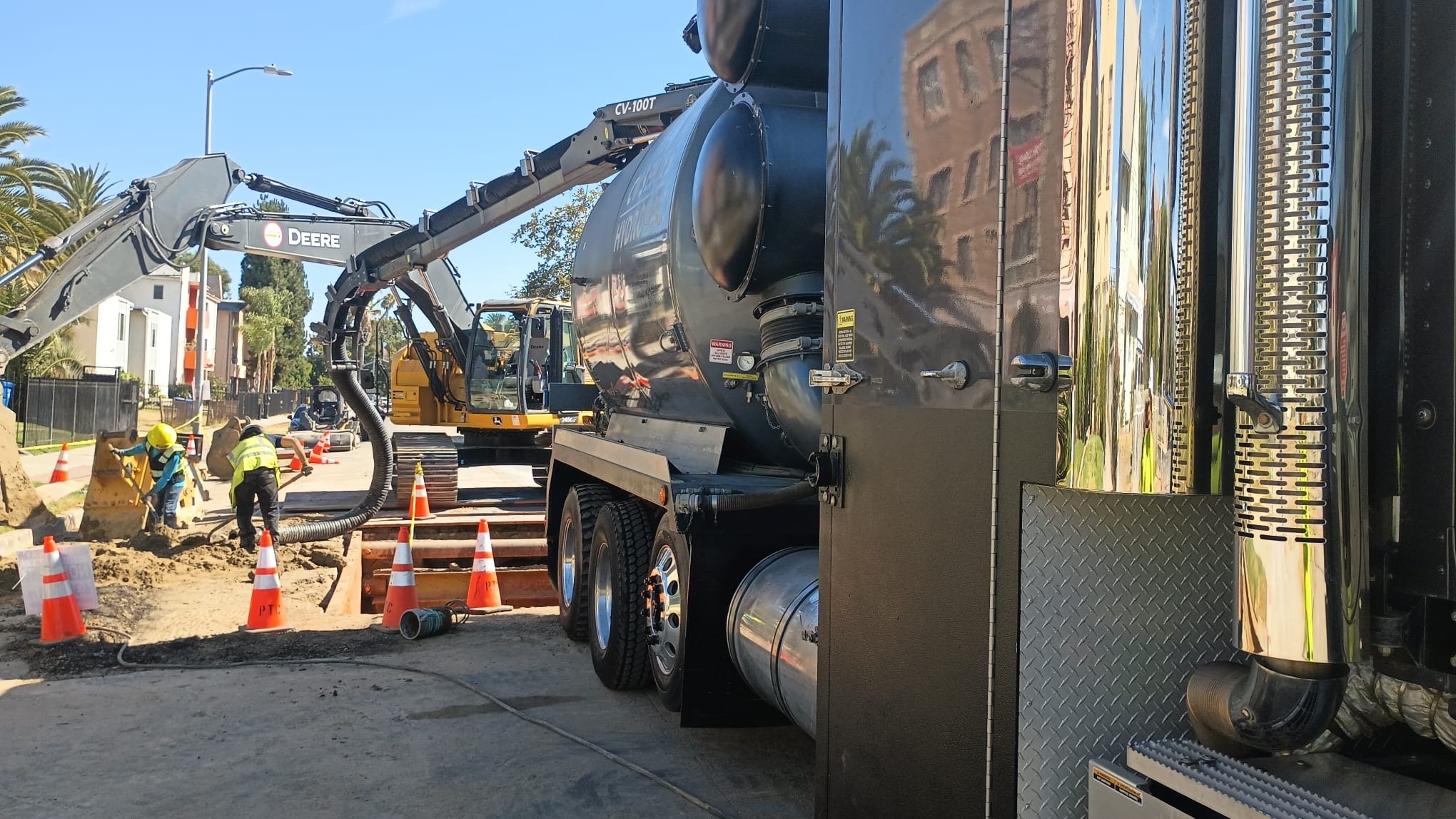
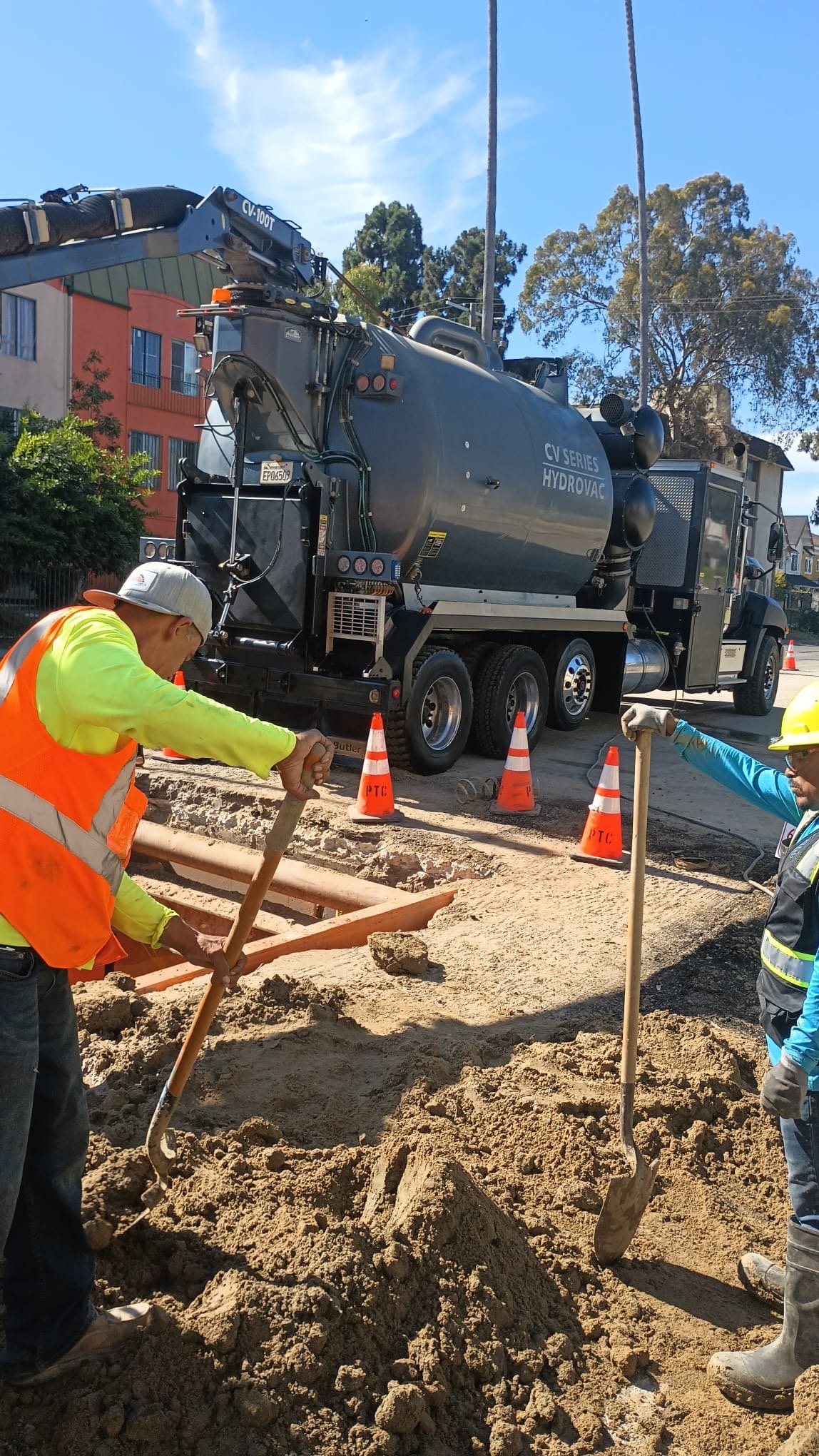
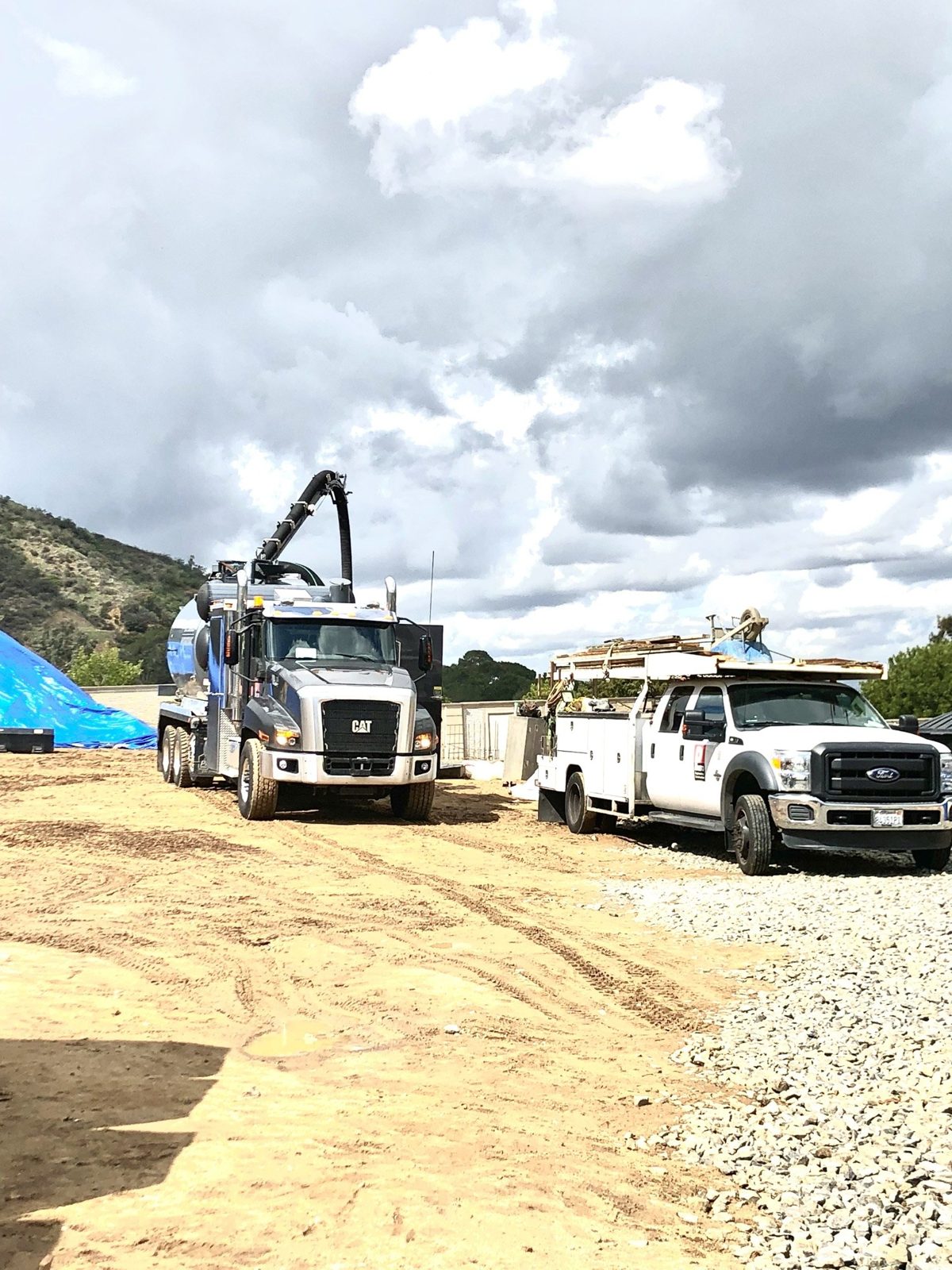
Our hydro-excavation truck uses pressurized water and a high-powered vacuum to expose buried gas, water, electrical, telecom and sewer lines without striking them. We pothole for engineers and designers, daylight lines ahead of trenching, boring and pier drilling, slot-trench for electrical, EV and solar work, and dig around tree roots and in tight spaces. Every job ends with a written pothole report: hole locations, depth to top, size and material, and photos.
Who it's for
- Civil and design engineers who need utilities exposed and measured at their stationing before plans are final
- General contractors and developers who need lines verified before trenching, boring, caissons or foundations
- Electrical, EV charging and solar contractors who need slot trenches and pad excavations across live utility corridors
- Plumbing and sewer lateral contractors who need cleanouts and laterals located and exposed
- Landscape architects, arborists and pool builders who need to dig around roots, hardscape and existing lines
- Property managers and HOAs with private utility failures to find and expose
How the work goes
- We start with a signed Service Agreement that lists the time-and-material terms. Nothing is scheduled before it is signed.
- The crew calls in Dig Alert, then exposes each line or target with water and vacuum. A foreman who is an OSHA-trained competent person runs every excavation.
- We record what we find, with depths and photos, before anything is backfilled.
- If you need a ceiling on the work, we agree an authorized amount in writing, and we stop and ask for your approval before we reach it.
What drives the cost
- Time on site, which depends on soil, depth and how many locations we open
- Access for the truck and the length of hose needed
- Disposal of the spoil, which is not billed when it can stay on site
- Travel to the site
What we do differently
Our own hydro-excavation truck. If the spoil can stay on site, we don't bill disposal.
What the law asks of you, and how we meet it
Inside the 24-inch tolerance zone on each side of a utility's marking, California Government Code §4216.4 requires the excavator to find the exact location of the line with hand tools before any power equipment is used. Vacuum excavation is allowed inside the zone when you note it on your DigAlert ticket and the utility does not object. That is what our hydro-excavation truck is for: it exposes the line quickly, without the force of a bucket, and leaves a record of what was found.
DigAlert (811) still comes first: at least two working days and no more than 14 calendar days before digging, with the area marked in white. Tickets last 28 days.
What we use it for
- Utility potholing for engineers and designers. Test holes at your stationing to confirm depth, size and material before the design is final, and bore-path checks ahead of directional drilling.
- Daylighting and line verification for contractors. Every crossing exposed before you trench, bore, drill piers or set pads.
- Slot trenching for electrical, EV and solar. Narrow, clean trenches for conduit across live corridors, and excavation for transformer and charger pads.
- Pier, caisson and post holes near utilities. Holes opened safely next to existing lines, then drilled or formed by our own crews. See caissons and shoring.
- Root-safe and tight-space digging. Long hose runs reach side yards, under decks and around tree roots, so roots and lines are exposed instead of cut.
- Vault, pull box and catch basin clean-outs. Soil and debris removed from structures and confined spaces.
What you get: the JFPEC pothole report
- A site map with every hole numbered
- GPS location and offsets to fixed features for each hole
- Surface type and thickness
- The utility found: type, material, size and direction
- Depth to top from existing grade, and to the bottom where exposed
- Condition notes: coating, damage, tracer wire, warning tape, encasement
- Photos before, exposed with a measuring rod, and after restoration
- A "not found" record with the search depth, when a line isn't where it was marked
- The restoration record: backfill, compaction and patch
- The hole log as a spreadsheet file for your design team
For engineers: we collect the data, you certify it
Our report is a contractor's field record of the conditions we exposed. It is not an engineering or survey deliverable and does not assign an ASCE 38-22 quality level. Quality-level certification, stamped utility plans and survey-grade coordinates come from your licensed engineer or surveyor. We give your engineer of record the field exposure and measurements that work needs.
Locate, expose, repair and build with one contractor
We also locate lines with our own electronic locator and camera before we dig. If a line we expose is broken, we can repair it on the same visit or give you a proposal for the full repair. And because we are a Class A General Engineering contractor, the same company can build the drainage, utilities, caissons or septic work that follows. See utility locating and underground utilities.
Not the same as our septic pumping truck
Our hydro-excavation truck digs. Our septic pumping truck is a separate liquid vacuum truck that pumps and hauls liquids. Need a septic tank pumped? See septic pumping.
Permits in the street
Potholing in a City of Los Angeles street needs a Bureau of Engineering permit with a plan stamped by a registered civil engineer, traffic control where required, and agency fees, which the owner pays directly. We coordinate the work with your engineer and the permit.
J.F. Prieto Engineering Construction, Inc., CA Lic. #525452, Class A General Engineering, Class B General Building and HAZ. Cal/OSHA annual trench and excavation permit. Every excavation is run by an OSHA-trained competent person.
Common questions
Can you give me a total before you start digging?
When the work depends on what is underground, we bill on time and material, because nobody knows the conditions until the ground is open. We can give you a typical range in writing. If you need a ceiling, we agree an authorized amount and stop for your approval before we reach it.
Can you waterproof a wall when there is no room to dig outside it?
Yes. Where a machine can't reach the soil side, we dig by hydrovac or by hand, or treat the inside face of the wall. Where both are possible, we price a soil-side option and an inside-face option. Every excavation is run by a foreman who is an OSHA-trained competent person.
What is hydro-excavation, and why use it instead of a backhoe?
Hydro-excavation uses pressurized water to loosen the soil and a vacuum to pull it into a truck, so we can expose gas, water, power and communication lines without a bucket touching them. California law requires careful digging within 24 inches of a marked utility, and hydro-excavation is a safe, fast way to do it.
What is soil replacement around a seepage pit?
When the biomat climbs so high in a pit that water can't soak out at all, we remove the clogged soil around the upper section of the pit, by excavator, by hand or with hydro-excavation, and replace it with gravel. It's the physical fix for a total failure, used after treatment steps or when a sale needs a working system on move-in day.
Are you an engineering or SUE firm? Can you provide Quality Level A?
No. We are a licensed contractor, not an engineering firm. We do the vacuum excavation and field measurements a Quality Level A investigation needs, with photos and tape-measured depths. Your engineer or surveyor assigns and certifies the quality level under ASCE 38-22.
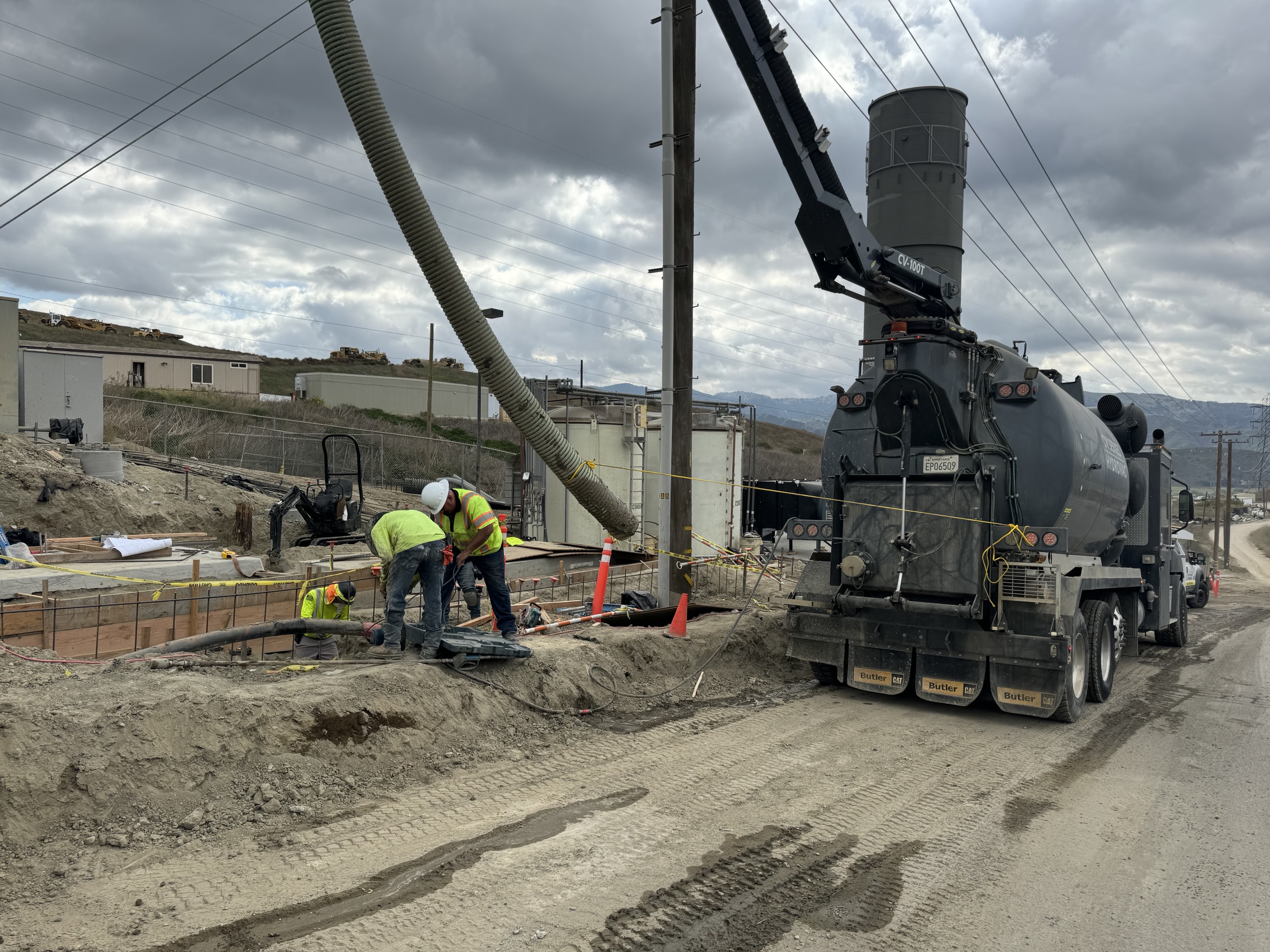
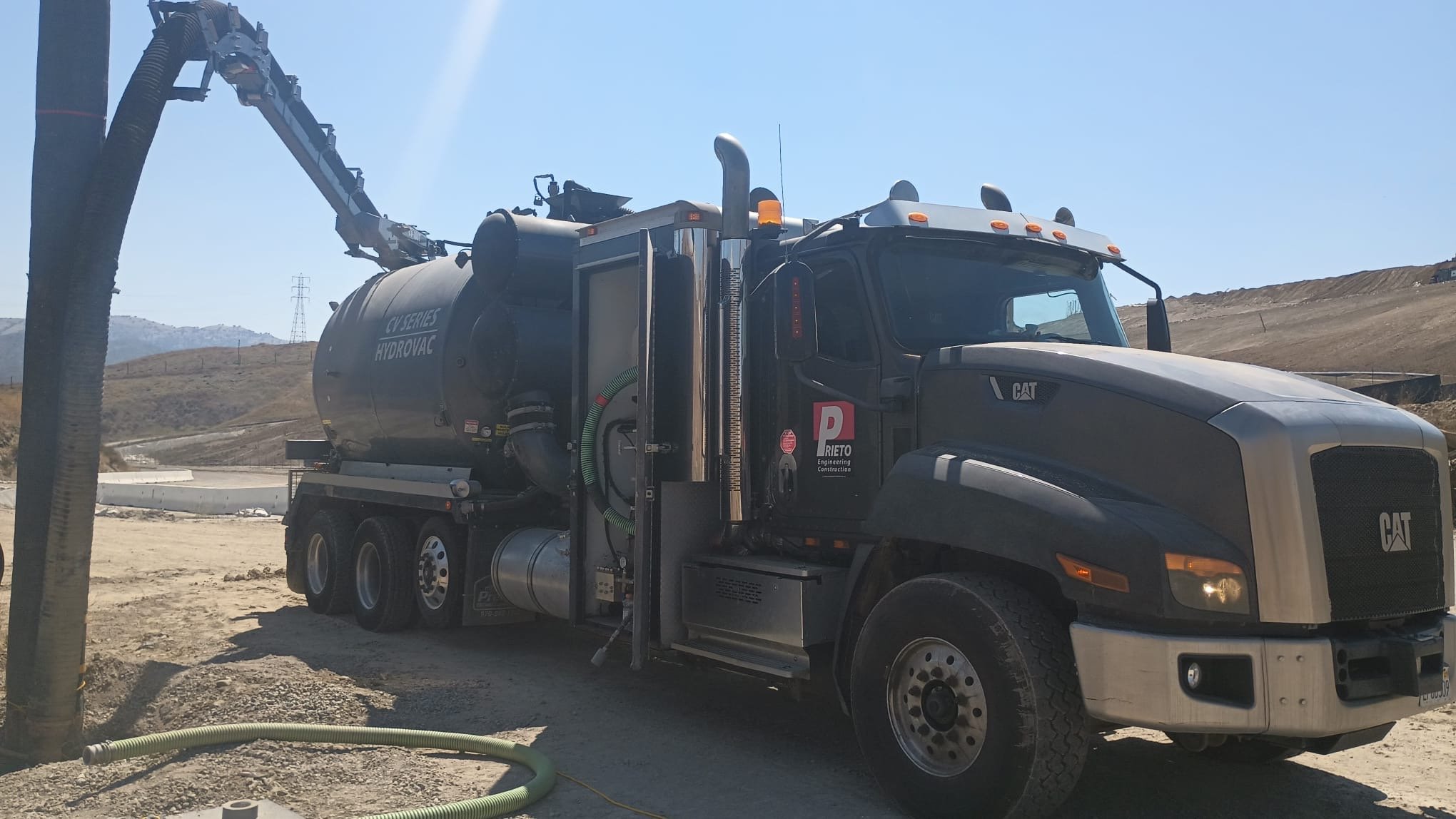
From the field



Ready to talk about your project?
Send us the details and we will follow up with next steps, or call us directly.