
Closing the Gaps Between Trades: Overlapping Scopes and Building From the Finish Back
Many scope gaps sit in the hand-offs between trades: who digs, who hauls, who sets blocking, who patches. You can close many of them by awarding overlapping scopes to one subcontractor, even when that sub brings in trade partners, and by planning backward from every finish so the rough-stage items are designed, drawn and priced before the job starts.
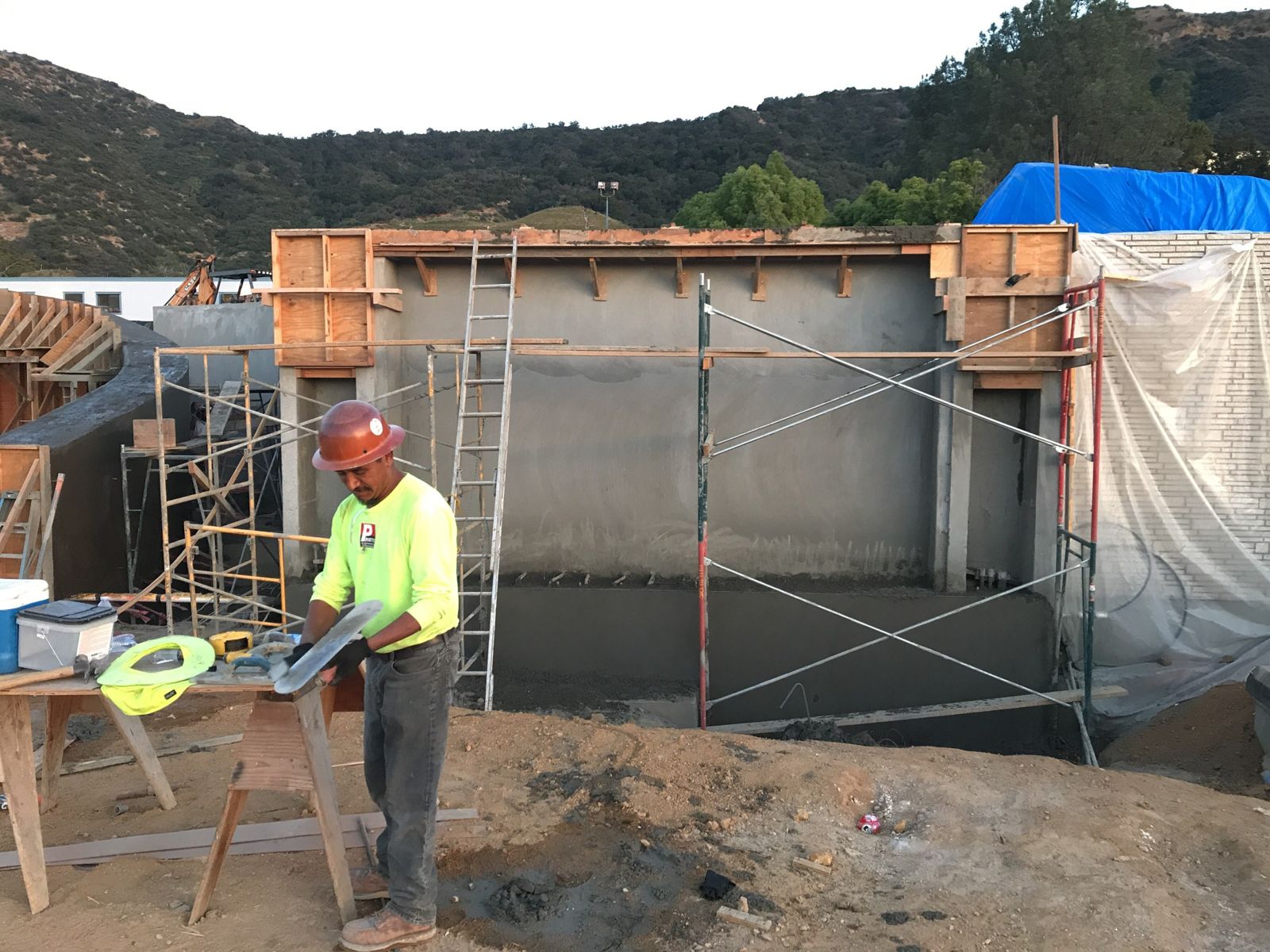
When a project goes over budget, people look at the big line items. In our experience, a lot of the money leaks out somewhere smaller: the hand-off between one trade and the next. The excavation contractor thinks the shoring sub hauls the spoils. The painter thinks the drywall finisher does the last skim coat. Nobody priced the blocking for the cabinets. Each gap is small on its own, and together they become change orders.
Get creative with how the scopes are split
Many subcontractors are willing to take on the trades next to theirs, even if they bring in a trade partner to do part of the work. When the price is competitive, letting one contractor carry the work on both sides of a hand-off closes the gap, because there is no longer a line between two contracts for scope to fall through. A few examples:
- Concrete with shoring and excavation. A concrete contractor who also takes on the shoring and the excavation, with trade partners where needed, owns the whole sequence: the site excavation, the foundation excavation, the spoils from the shoring, and the pour. Who hauls what is settled in one contract.
- Hardscape with light grading and drainage. When the hardscape contractor is in charge of the finish grading and the surface drainage, the slopes, area drains and flatwork are built to work together.
- Drywall with paint. One company for both trades means the finish level of the walls is set by the people who will paint them.
- Hardware with blocking. When the contractor installing door and bath hardware also handles the blocking during framing, the backing is placed with the hardware layout in mind.
- Millwork set up at framing. When the millwork and cabinet installer comes in at the framing stage to lay out blocking and backing, the cabinets and trim are less likely to need walls opened later.
None of this replaces good plans or good contracts. Confirm that each contractor and trade partner holds the right license classification and insurance for the work, and have your attorney review how the scopes are written. Done right, it reduces the number of places where scope can sit between two subcontracts and belong to no one.
What the research says
We aren't the only ones who see it this way. A 2025 legal brief in ASCE's Civil Engineering Source describes scope gaps as work shown in the plans and specifications that isn't in any trade contractor's scope, and notes that one of the most common kinds happens where one trade's work meets another's. Gaps found late usually mean added cost and delay, because someone still has to be paid to do the missing work. In the court case the brief covers, an electrical subcontractor and a general contractor ended up in litigation over roughly $83,000 of trenching and backfill for underground conduit, interface work between two trades.
Research on the schedule side points the same way. Field trials published in 2026 by the Simplar Foundation, with Arizona State University, the University of Kansas and UNC Charlotte, studied work that required frequent trade-to-trade handoffs. Cutting those handoffs finished work about 30% faster and, on closely sequenced work, raised production by 37% to 50%. The researchers studied crews with workers credentialed in more than one trade, not how subcontracts are split, but the lesson carries over: fewer handoffs means less waiting and fewer places for work to stall.
Why it helps the schedule
This is something we have pushed contractors and developers to try for years: negotiate with us to carry the overlapping trades, close the scope gaps, and make the job seamless. In our experience the benefit doesn't stop at fewer change orders. When one contractor carries the excavation, shoring, underground, concrete and drainage, the crew doesn't wait for another company to show up before the next step. We can keep moving on several fronts at once, and the schedule improves. That is where the benefit reaches everyone on the project.
Start with the finish in mind
The second idea is just as important: plan every project backward from the finished product. Walk through each finish, from the cabinets and tile to the light fixtures, hardware, hardscape and landscaping, and list what each one needs at the rough stage to be built well. Blocking, backing, embeds, sleeves, slopes, drain locations, conduit, waterproofing and the exact elevations all have to be in place long before the finish arrives. If they are listed and drawn before construction starts, they can be priced and built in sequence instead of fixed later.
Decisions belong with the design team, not the field
As a multi-trade contractor, we have seen how many important decisions are left to a superintendent to make in the field. Elevations, transitions, backing locations, drain slopes and how two materials meet often aren't drawn. They get decided on site through an RFI or a quick field call, under schedule pressure and often without the full design context.
Plan check approval is an important goal for every project. But plan check reviews for code compliance. It doesn't confirm that every detail and elevation a builder needs is on the drawings. Those details make a real difference to how the finished project looks and performs, and the right place to decide them is with the architect and engineers, on paper, before the work starts, not after the fact in the field.
How we bring this to a project
We are a family-run, second-generation contractor, working in Los Angeles since 1978. For almost 50 years we have self-performed overlapping trades, including excavation, shoring, concrete, underground utilities, storm drain, waterproofing, masonry and hardscape, and we run general contracting and construction management. When we review a project, we look at how the scopes are split and where the hand-offs fall, and we read the plans from the finishes back to the rough stage. Missing details go to your design team as RFIs, so the decisions are made where they belong.
What we don't do
We don't design or engineer. Design decisions stay with your architect and Engineer of Record; we identify the gaps and the questions for them to answer. We are a licensed contractor, not a law firm, and contract terms go to your attorney.
Frequently asked questions
Isn't it cheaper to hire a separate sub for every trade?
Not always. Separate subs can look cheaper on paper, but every hand-off is a place where scope can be missed. A competitive combined price can reduce change orders tied to hand-offs.
Does combining trades really help the schedule?
It can. Research on work with frequent trade handoffs found that reducing those handoffs finished work faster, and in our experience one contractor carrying overlapping trades can keep several fronts moving at once.
What if the sub doesn't do every trade themselves?
That's fine. Many subcontractors bring in trade partners. What matters is that one contract carries the scope on both sides of the hand-off, and that everyone doing the work is properly licensed and insured.
When should the finish-back review happen?
During design, before the plans are bid, so the rough-stage items can be drawn and priced.
See our plan-gap and constructability review, bid review and leveling, and why construction projects run out of money.
Planning a project? Call (800) 606-3880 or send a short description through the contact form. Family-run in Los Angeles since 1978. CA Lic. #525452 · Class A + B + Haz.
Sources
- ASCE Civil Engineering Source, Legal Brief: Beware scope gaps (Loulakis and Cullinan, October 2025)
- For Construction Pros: Simplar Foundation research on multi-trade workflows and trade handoffs (2026)
- Builder: Multiskilling could cut construction schedules by up to 38% (Simplar Foundation, 2026)
- JF Prieto field practice. General information, not legal advice.