Building Around a Working Hospital: NPC-5 Tank Construction
NPC-5 tank work on a working hospital is phased around patient care. Infection control measures set by the hospital's risk assessment, utility tie-ins made in short planned shutdowns, open emergency and fire access, controlled noise and working hours, and close coordination with every stakeholder keep the hospital running while the tanks are built.
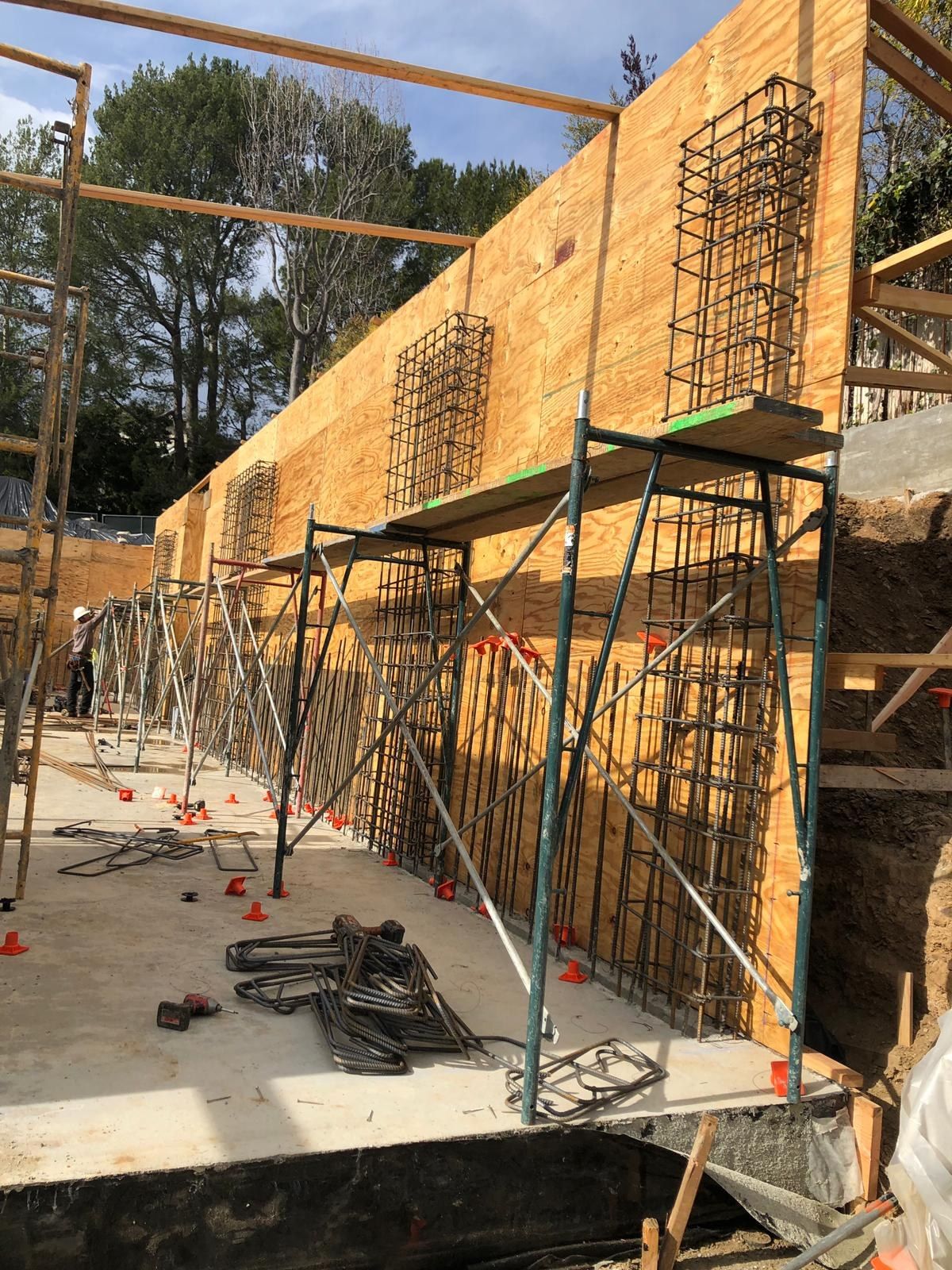
A hospital never closes for construction. When the work is NPC-5 water and sewage holding tanks, it happens on a live campus: patients in the beds, ambulances on the drives, and water and sewer lines that cannot go down without a plan. How the contractor phases and manages that work matters as much as the tanks themselves.
Why is hospital construction different?
Three things set a hospital campus apart from an ordinary job site. The building is always occupied, by people who are already sick. The utilities under the site feed patient care, so an unplanned shutdown is a clinical problem, not an inconvenience. And the work runs under HCAI's permit and inspection process, with the hospital's own facilities, infection prevention and safety teams watching every step.
What does infection control mean for site work?
Most hospitals require an Infection Control Risk Assessment (ICRA) before work starts. The hospital's infection prevention and facilities teams rate the work and the nearby patient areas, then set the controls. For exterior tank work those usually include:
- Dust control at the excavation and on haul routes, with barriers where the work is close to air intakes, doors or windows
- Covered haul-off and clean tires and drives
- Sealed penetrations and temporary barriers where work reaches into the building
- Daily cleanup, with the hospital's team inspecting the controls
The contractor's job is to build those controls into the plan and the price from the start, not add them after the first complaint.
How do you keep water and sewer running during tie-ins?
Connecting new tanks to a hospital's water and sewer systems means working on lines the hospital cannot lose. The usual approach:
- Locate before digging. Existing water, sewer, gas, electrical and medical gas lines are located and exposed by hydrovac before excavation near them.
- Build ahead of the tie-in. Tanks, piping and valves are built and tested before any existing line is touched.
- Plan each shutdown. Every planned outage goes through the hospital's shutdown request process, with a date, a duration, a backup plan and the hospital's sign-off.
- Keep the outage short. Crews, fittings and materials are staged so the connection is made in the shortest window possible, often at night or on a weekend if the hospital asks.
What about ambulances, deliveries and fire access?
Emergency department access, fire lanes and exits stay open. The phasing plan shows how traffic, deliveries and pedestrians move around the work at each stage, and where trench plates, barricades and signs go. Where the work affects exits or fire access, the hospital may require interim life safety measures, and those go into the plan too.
Noise, vibration and working hours
Saw cutting, breaking concrete and compaction carry into patient rooms. The hospital sets the working hours and quiet periods, and the noisiest work is scheduled around them. Equipment choice matters as well: smaller machines, vacuum excavation near sensitive areas, and sequencing the loud work into short blocks.
Why does the contractor's equipment and experience matter?
On a hospital campus, one damaged line can take down patient care. A cut medical gas line, a broken water main or a severed power feed to an emergency system is not a repair ticket; it is a patient safety event. That is why the contractor's equipment and experience matter as much as its price.
- Hydrovac excavation. A vacuum excavation truck uses pressurized water and suction to expose lines without a bucket ever touching them. It is the accepted safe method for digging around live medical gas, water, sewer and electrical lines, and for digging in tight spaces next to occupied buildings. A contractor that owns its own hydrovac truck can pothole and verify every line before the excavator moves, without waiting on a rental.
- The right excavation equipment. Smaller machines for tight campus spaces, shoring for deep tank excavations, and compaction equipment sized to the work. Trenches and excavations 5 feet or deeper that workers enter need a Cal/OSHA permit; we hold an annual one.
- Experience on hospital work. A crew that has worked on a hospital campus before knows how infection control, shutdown requests, the inspector of record and the hospital's own teams work, so the first weeks are not spent learning.
- The right license. Tank and site piping work is the infrastructure California's Class A General Engineering license is built around. See Who Should Build a Hospital's NPC-5 Tanks? Class A vs Class B in California.
When you compare contractors, ask who owns the hydrovac truck, who performs the excavation and shoring, and what hospital work the crew has done.
How is the work managed?
A hospital job has more stakeholders than most: facilities, infection prevention, safety, the engineer of record, the HCAI-certified inspector of record, HCAI and the other trades. Keeping them all informed is part of the job. We run our jobs on project technology that schedules, tracks and shares information with every team:
- One current plan set for every trade, with superseded sheets pulled as revisions land
- A master schedule with critical-path tracking, checked against every delivery, inspection and planned shutdown
- A follow-up register that tracks every promise, submittal and deadline, reviewed daily
- Every document filed as it arrives, with version control, and every decision logged
- Owner reporting with dated site photos and a closeout package
Where we fit
JF Prieto Engineering Construction, Inc. builds the civil side of NPC-5 water and wastewater storage, self-performing a large share of the work with our own crews, excavators, shoring and hydrovac truck, and has worked for hospitals before, including OSHPD work (OSHPD is now HCAI). We do not design; the engineer of record does, and HCAI reviews and permits the plans. See our Hospital NPC-5 Water & Wastewater Tanks service, California Hospital NPC-5: Water and Sewage Holding Tanks by 2030 and Who Should Build a Hospital's NPC-5 Tanks? Class A vs Class B in California.
CA Lic. #525452 · Class A + B + Haz