Why Most LA Septic Systems Fail: The Biomat, Not a Broken Part
Most septic systems in Los Angeles fail because a black, slimy layer called the biomat grows in the soil around the seepage pit or leach field, not because a part broke. It grows without oxygen. Pumping alone doesn't stop it; bringing oxygen and aerobic bacteria back into the system is the way to fight it.
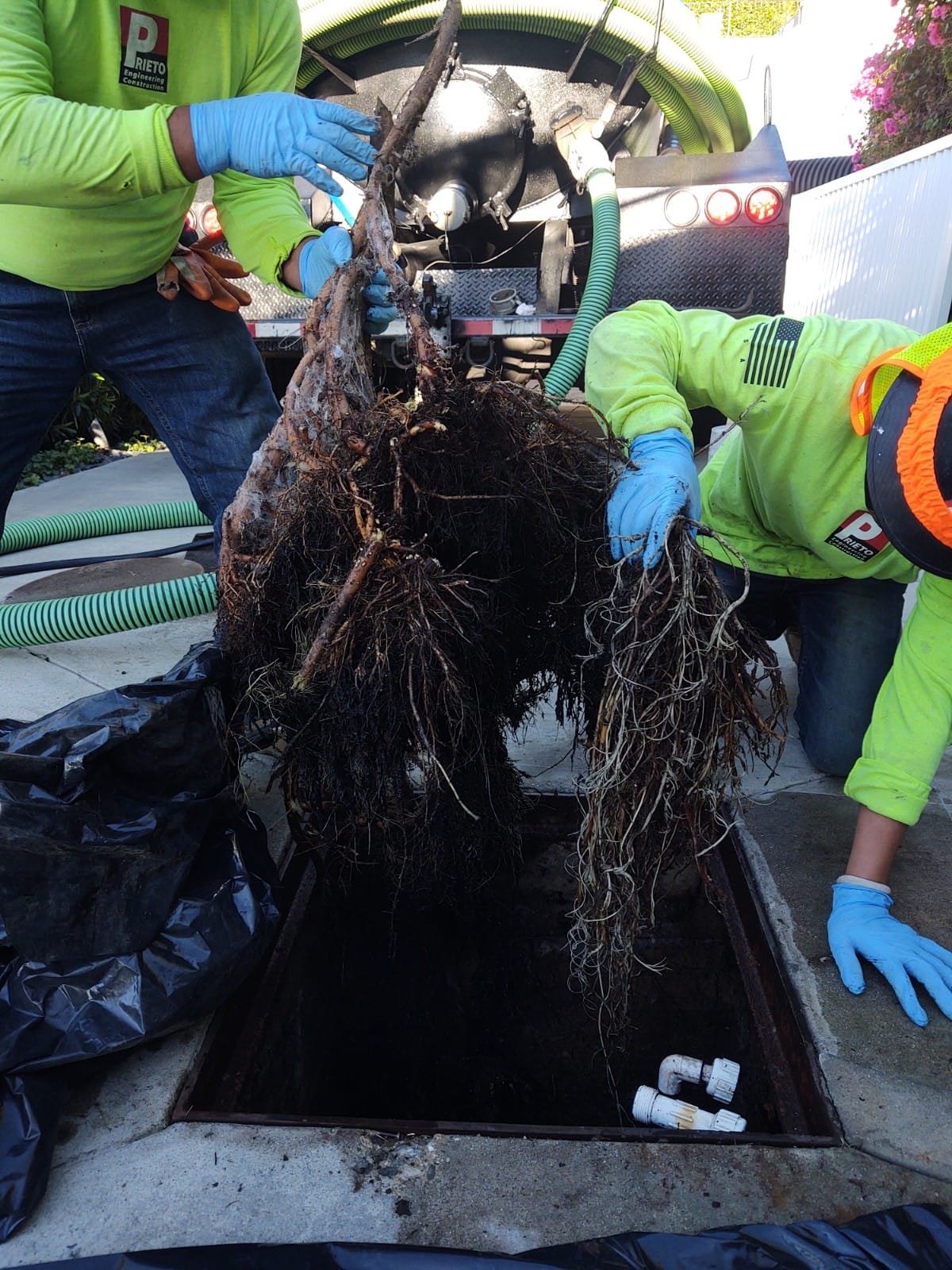
Most septic systems in Los Angeles don't fail because something broke. They fail because a black, slimy layer called the biomat grows in the soil around the seepage pit or leach field until water can't get through it. Pumping the tank doesn't stop that growth on its own. Oxygen and aerobic bacteria are the way to fight it.
What is a septic system, really?
Most septic systems are, quite literally, a hole in the ground that takes on the liquid from the waste. The tank holds the solids. The liquid overflows into a seepage pit or a leach field and soaks into the soil.
That works for a while. But over time it is going to back up, because a conventional system has no way to eliminate, process or reduce the biomat that builds up where the liquid meets the soil.
What is the biomat?
The biomat is a slimy layer that lines the soil in a seepage pit or leach field and stops water from soaking in. It grows in an anaerobic environment, meaning one with no oxygen. The bacteria that live there produce a black slime in the dirt, and that slime doesn't let water move past the pit or the field into the regular, good soil beyond it.
In Pumper (2009), Roger Machmeier described the biomat side of the soil as always oxygen deficient, or anaerobic, and noted that oxygen in the soil decomposes the mat.
In a seepage pit it forms on the pit walls; in a leach field, along the trench bottoms and sides. Either way, the soil stops taking water as fast as the house sends it.
Is your failure structural or biological?
We sort this out first on every failing system, because the fix is different.
- Structural failure. A broken tank, a collapsed pit, a crushed or root-filled line. Something physical is damaged, and the damaged part has to be repaired or replaced.
- Biological failure. The parts are intact, but the biomat has sealed the soil. Nothing is broken, and replacing parts won't change the biology.
Most of the failures we see are biological, and a biological problem can often be treated in the system you already have.
What does "failure" actually mean?
The industry calls a system failed when the water level gets so high that it backs up. That is typically too much biomat clogging the soil, so the system can't percolate water faster than the household uses it.
Doesn't pumping prevent septic failure?
Pumping has a real job. It removes solids from the tank so they don't carry over and plug the pit. Occasional pumping can also help a struggling pit by keeping the top of it dry for a while.
But pumping alone doesn't stop the biomat from growing. Many people believe regular pumping is what keeps a system alive. In reality, systems usually fail not because the tank wasn't pumped, but because the biomat was allowed to grow too long with no aerobic biology working against the anaerobic biology that makes it.
Resting proves the point. Jim Anderson, in Onsite Installer (2014), explained that resting a soil absorption area works because air lets bacteria break down the mat. In our experience, a two- or three-day rest after pumping usually isn't enough; the classic method rests each of two dispersal areas for about a year in turn, and many properties have only one.
How does aerobic treatment fight the biomat?
If the biomat grows where there is no oxygen, the way to fight it is to bring oxygen and good bacteria back into the system. With modern technology and the systems we've developed, we counteract the anaerobic bacteria that clog the soil by regenerating aerobic bacteria that consume them, so the soil can keep percolating.
Here is how that works in practice:
- In the tank. On a healthy or newer system, an ORCA unit is designed to digest the waste and organics in the tank and turn them into clear liquid. When it's working, the water in the tank turns see-through and smells like stale rosy water instead of sewage.
- Into the pit or field. Cleaner effluent overflows into the secondary carrying healthy doses of aerobic bacteria, which feed on the biomat. Because the unit keeps reproducing bacteria, it keeps working against the mat.
- In the pit itself. Where the pit water is high, a unit can go directly in the pit. It oxygenates the water so the bacteria live longer and keep working.
Criado Monleon and colleagues, in Frontiers in Microbiology (2022), found that biomat growth was far more limited under highly treated effluent than under plain septic-tank effluent.
ORCA units are designed to reduce, and in many cases eliminate, the need for pumping. They have limits: a unit can't digest things that aren't safe for a septic system, it can't fix a pit that has already failed, and it stops working if the air pump is unplugged or burns out. Some pits also need a few pump-down cycles so the top of the pit can dry out.
What is the remediation ladder?
When a system struggles, we don't jump to a new one. We climb a ladder, one stage at a time and only as far as needed, moving faster when problems come closer together.
- Stage 0: Prevention. A bacteria generation unit in the tank before anything goes wrong. Every septic owner should have one.
- Stage 1: ORCA unit in the tank, when problems start.
- Stage 2: A unit in the seepage pit, if problems persist.
- Stage 3: Occasional pumping, to keep the top of the pit dry so the biomat can dry out. Sometimes this alone resolves it.
- Stage 4: ORCA dosing directly in the seepage pit, if results aren't moving fast enough.
- Stage 5: Dosing in both the tank and the pit, the worst case on the treatment side.
- Stage 6: Soil remediation: removing the clogged soil around the pit and replacing it with gravel, for badly failed systems where the water comes right back.
We record water levels at every visit and decide the next stage on the trend, not on one reading. If the levels are reversing, we hold where we are and don't sell the next stage. A new secondary or a new system, designed and stamped by licensed professionals, is the last resort, used only when the ladder can't recover the system.
A home sale is different. There's no time to climb one stage at a time, so a sale usually means doing the treatment stages at once, often with soil remediation.
Frequently asked questions
Why is my seepage pit full, and is that bad?
A seepage pit shouldn't hold standing water near the top. A high level usually means the soil around it has clogged with biomat and isn't taking water as fast as the house sends it.
Do septic aerators or bacteria really work?
They are designed to digest waste in the tank and carry aerobic bacteria into the pit or field to work against the biomat. We have been installing aerobic bacteria generation systems for about 20 years, and we never promise a result; we track water levels to show the trend.
Do I still need pumping with the unit?
ORCA units are designed to reduce, and in many cases eliminate, the need for pumping. They can't digest septic-unsafe materials, can't fix a pit that has already failed, and stop working if the air pump is unplugged.
Can't you just replace the pit?
Not usually. A new pit can go in only where approved plans already set aside a replacement area, and even then it needs a permit and a percolation test or a Qualified Professional's report. An older system with no plans on file usually needs a feasibility study first. That study often calls for a new system, many times an advanced treatment system, with plans and submittals, and a new pit location that has to be drilled and tested. That is a much bigger process, which is why we test and treat the system you have first.
Where we fit
JF Prieto Engineering Construction, Inc. is a family-run Los Angeles contractor, in business since 1978, that inspects, repairs and treats septic systems across LA County. Our approach is fix and treat first: we repair and treat the system you have, and replace it only when needed. We disclose and outline everything about your septic system, then get it certified and working. If your pit is full or your drains are slow, call (800) 606-3880. See also My Septic Failed. Do I Really Need a Whole New System?, What ORCA Pods Do for a Struggling Septic System, and When They Help and our ORCA Septic Restoration service. CA Lic. #525452 · Class A + B + Haz.
Sources
JF Prieto field practice and owner statements (Giulliano Prieto, 2026-10-31, 2026-11-04 and 2026-11-14; Question Bank answer 2.4).
- Roger Machmeier, "Biomat Basics," Pumper, July 2009.
- Criado Monleon et al., Frontiers in Microbiology, 2022.
- Jim Anderson, "Can resting restore soil infiltration?" Onsite Installer, August 2014.