
Living Below a Burn Scar: What La Cañada, La Crescenta, Malibu and Altadena Taught Us
A burned hillside cannot hold rain the way it used to, so even a short, intense storm can send mud, rocks and debris downhill. The first few rainy seasons after a fire are usually the riskiest. Homes below a burn scar should keep drains and basins clear, steer water with sandbags and swales, follow evacuation warnings, and line up a contractor before the storm.
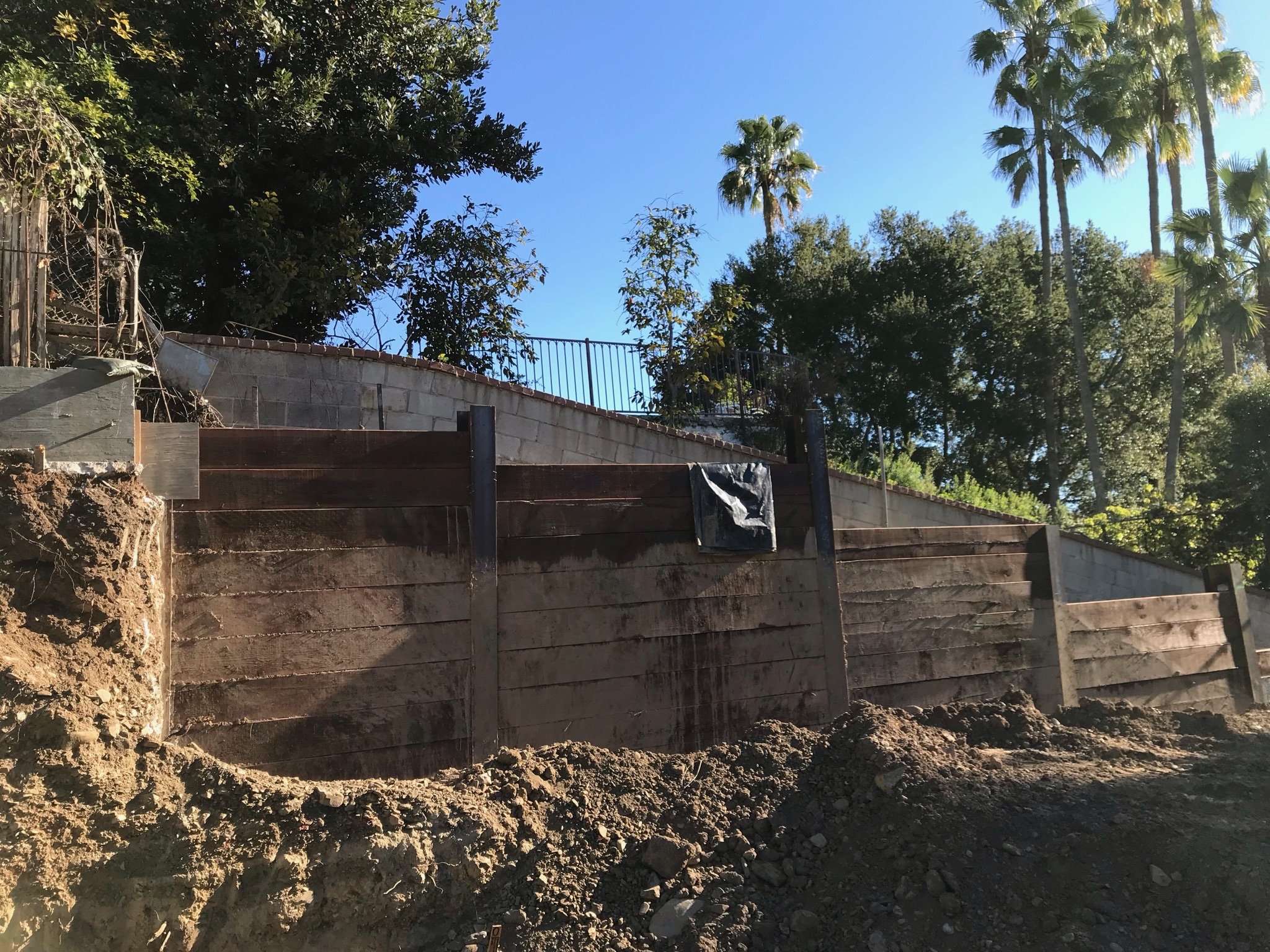
Why burn scars send mud downhill
Fire strips the plants and roots that slow rain down and hold soil in place. It can also leave a layer in the soil that sheds water. The next heavy rain runs off the slope fast and carries ash, soil, rocks and burned trees with it. That is a debris flow. It can move faster than people can run, and it follows canyons and streets.
2010: La Cañada Flintridge and La Crescenta
The 2009 Station Fire burned the San Gabriel Mountains above La Cañada Flintridge and La Crescenta. On February 6, 2010, heavy rain sent debris flows out of the canyons. The Mullally Debris Basin overflowed into the Paradise Valley neighborhood, and Ocean View Boulevard turned into a river of mud. Concrete K-rail barriers were pushed aside, cars were carried off driveways, and dozens of homes were damaged.
When the mud came down out of the Angeles National Forest, our crews went into those neighborhoods as volunteers to help dig out. That storm taught us what we still tell clients: basins and K-rail can be overtopped, mud follows the streets, and the work starts the moment it is safe to get in.
2018–2019: Malibu after the Woolsey Fire
After the Woolsey Fire in November 2018, we prepared sites in Bell Canyon and Ramirez Canyon in Malibu and consulted with homeowners on how to limit the mud they could expect. The work was practical: rows of sandbags along concrete swales, straw and jute netting on gullies, and checking the basins above Pacific Coast Highway. Many of those clients had no phone service, so we coordinated by text and met them at the highway. When the January 2019 storms arrived, our crews were out on emergency mud removal in Malibu.
2024–2026: the Franklin, Palisades and Eaton burn areas
The Franklin Fire burned about 4,000 acres around central Malibu in December 2024. In January 2025 the Palisades Fire burned the Pacific Palisades and eastern Malibu, and the Eaton Fire burned about 14,000 acres above Altadena and Sierra Madre. On February 13, 2025, a storm sent debris flows into Sierra Madre and across roads in Altadena and Malibu. On fire-damaged lots, the County's Fire Debris Removal permits required erosion control to be in place and photographed before the permits could close. We installed and documented that work. On November 18–20, 2026, evacuation warnings went out again for burn scar areas as an atmospheric river moved through. The County warns that areas in or below a burn scar less than five years old carry a higher risk, so these neighborhoods will be watching every storm for several more seasons. See our burn area guide.
What we have learned
- The first rainy seasons after a fire are the riskiest. Prepare before the first storm, not after it.
- Clean basins and drains are the cheapest protection there is. A basin that is already half full of silt cannot catch the next flow.
- Sandbags steer water; they do not stop debris flows. Plan where the water goes.
- Mud follows streets and driveways. Look uphill and at the street, not only at your own slope.
- Follow evacuation warnings. Property can be repaired. Our crews go in only when officials say it is safe.
- Line up help before the storm. After a big event, every crew in town is booked.
See our drainage services and earthwork and hauling.
Mud on your property, or rain on the way? Call (800) 606-3880 or send us photos through the contact form. Family-run in Los Angeles since 1978. CA Lic. #525452 · Class A + B + Haz.
Sources
- JF Prieto field records and correspondence, 2010–2026.
- USGS: post-fire debris flow in Mullally Canyon, February 6, 2010
- CBS Los Angeles: County to clear out debris basin above La Cañada
- Crescenta Valley Weekly: The clean up begins, the 2010 flood issue
- AP via KPBS: debris flows hit Sierra Madre, February 2025
- Claims Journal: LA warns of evacuations as atmospheric river hits coast, November 19, 2026