Who Pays to Dig Up the Septic During Escrow? Buyer vs Seller in LA
We believe the seller should pay to dig up and expose a buried septic system during escrow, so the buyer only pays for the inspection. Think of a locked garage: the seller pays the locksmith, the buyer pays the inspector. A buyer can still choose to pay, but they would be improving a house they may not buy.
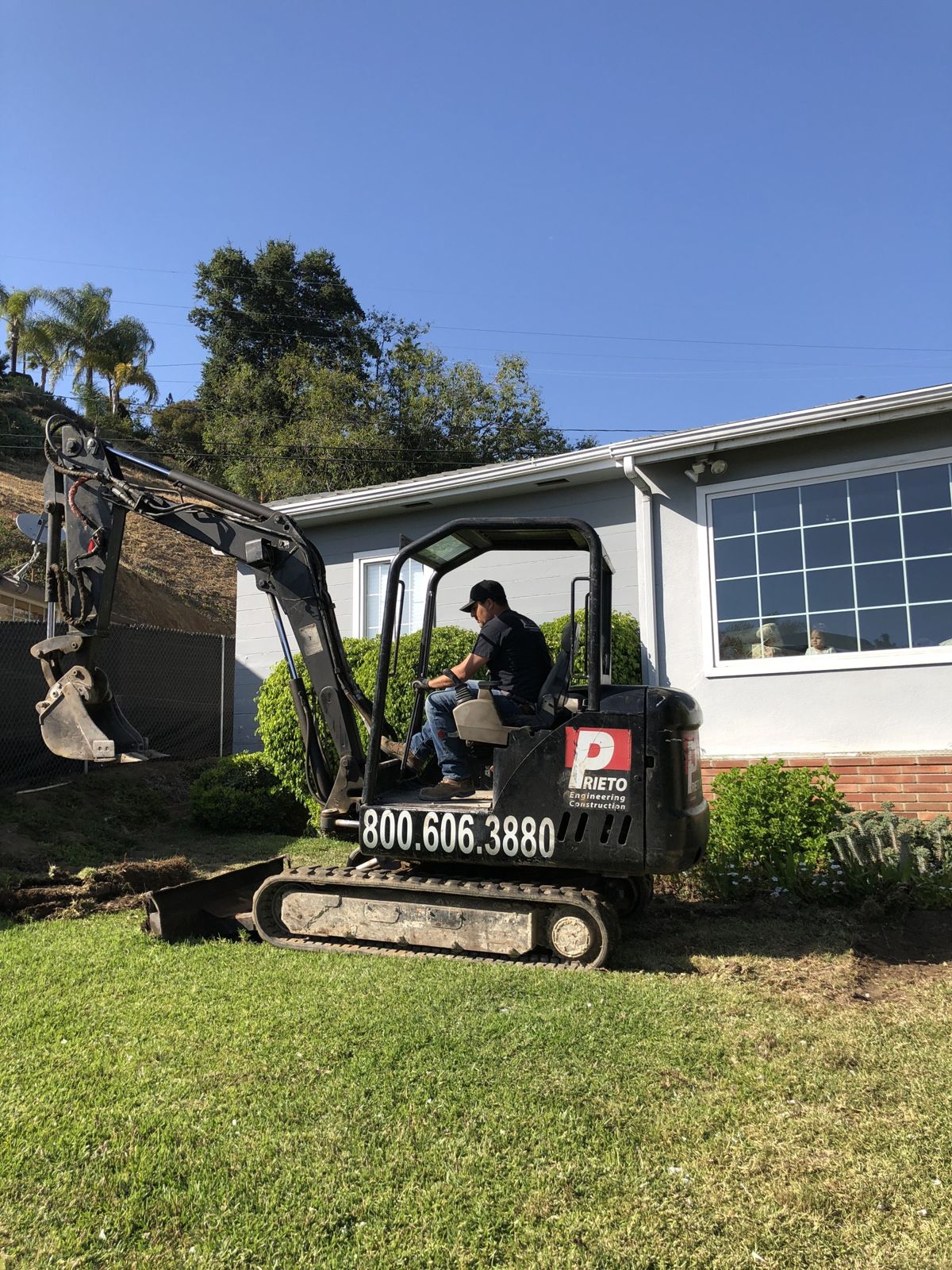
We believe the seller should pay to dig up the septic system during escrow, so the buyer only pays for the inspection. That is our position, not a law, and it doesn't stop a buyer from paying for the digging if they choose to. Here is how we explain it, and why we hold to it.
Who should pay to dig up the septic?
The seller. Our answer has always been the same: think of a locked garage. If a buyer wants the garage inspected and the seller doesn't have the key, the seller pays the locksmith to open the door. The buyer pays the inspector to look inside.
A buried septic system works the same way. Digging, locating and exposing the parts is the locksmith. Inspecting them is the inspection. The seller opens the door, and the buyer pays for the look.
Why does a septic system need to be dug up at all?
Because you can't certify what you can't see. On many older LA homes, the lids are buried under soil, a patio or a planter, and nobody is sure where the pits are. A camera run through a small cleanout is a partial look, not an inspection of the system.
For a Septic Certification, we need access to:
- Both sides of the tank, the inlet side and the outlet side.
- The distribution box (D-box), where there is more than one pit. It controls which pit gets the flow.
- Every seepage pit or leach line on the property.
Minimum access at the tank is an 18 to 24-inch riser. When parts are buried, a separately scheduled crew locates and exposes them on time and materials, because nobody can know in advance how deep the lids are or how far the lines run.
Why do we think the seller should be responsible?
When a system needs digging before it can be inspected, it usually means the system is missing things it should already have: permanent access to both sides of the tank, to the distribution box, or to the seepage pits. Those missing pieces are what stop the buyer from getting a simple inspection.
That is a condition of the property the seller owns, not something the buyer created. Putting in proper access is an improvement to the seller's system, and it stays with the house whether this sale closes or not. If risers go in while the system is open, the next owner never has to pay to dig it up again.
There is a practical side, too. The digging happens on the seller's property, so we prefer the seller, as the property owner, to sign the agreement with us before that work starts.
Why shouldn't the buyer pay for the digging?
Because the buyer doesn't know yet that they are buying the house. Septic inspections usually happen while the buyer is still inside the contingency period. Spending money to dig up and improve a property you might walk away from is money you may not see again.
A buyer's money during contingency is best spent learning what is in the ground: the inspection. The work of making the system reachable belongs to the person who owns it.
Can the buyer pay for it anyway?
Yes. Our belief doesn't prevent a buyer from paying to expose the system, and sometimes a deal moves that way. If you are a buyer and you choose to pay:
- Get the arrangement in writing with the seller through your agents.
- Know that we still prefer the seller, as the property owner, to sign the agreement for any work on their land.
- Understand that the access you pay for stays with the house if you don't close.
Who pays is a negotiation between the parties. Our job is to tell everyone what access is needed and what the work involves, so that negotiation is based on facts.
What if all anyone can find is a cleanout?
In a sale, we try to keep the buyer paying only for the inspection, and to give the seller something real to make a decision on, usually based on what we can see or find on the day. If nothing can be found or seen except a cleanout at the house, we require a time and materials agreement before we locate and expose the system, preferably signed by the seller.
What does the first proposal cover?
After the certification inspection, we price the items we can see and assess. The proposal says how far it extends and where it stops. It also lists the items we are not sure about yet, each one with its potential to be either fine or in need of repair, and, ideally, why it matters. Parts we could not reach, or water levels we could not read in the pit, drain field or between structures, can hide work nobody can see yet, and the proposal says so.
Once we know what needs to be done, we give a fixed-price proposal. It names the specific items we plan to fix and excludes everything else. If more work is found after that, in an area nobody could see yet, it is located on time and materials and priced separately.
When the owner hires us directly, outside a sale, we work the other way around: we inspect and locate everything first, on time and materials, and then give one complete proposal for everything we found.
General Inspection or Septic Certification: which one are you ordering?
We offer two tiers, and it helps to know which one the buyer, lender or agent is asking for.
- General Inspection. We look at the accessible parts and send a summary of what we found, with photos and recommendations.
- Septic Certification. A pass/fail report. Every component has to be accessed and inspected, and any listed repairs done, before we issue a Certification Letter.
A system that can't be fully reached gets a report, not a certification. The same goes for a cesspool. That is the main reason access matters so much in escrow: without it, the best anyone can hand the buyer is a partial picture.
What does the Septic Path look like during a sale?
We run every septic job on the same seven steps, the Septic Path. In a sale, it looks like this:
- Call. Tell us it's a sale, your contingency dates, and whether anyone knows where the lids are. We can usually be on site within 24 hours for a septic certification.
- Inspect. We open what's reachable. If parts are buried, a crew locates and exposes them first, paid by the seller in our view.
- Disclose. You get findings with photos and plain-language recommendations.
- Plan and permit. If repairs are needed, we budget them once the system is exposed. Your expediter files the permits, or we file them when needed.
- Fix and treat first. We repair and treat the system that's there, and replace it only when needed.
- Certify. Once every part is accessed and the repairs are done, the Certification Letter is issued.
- Keep it working. If the system goes on an ORCA or pumping plan, the new owner gets a service due date and a reminder.
Should the tank be pumped before the inspection?
No. Please don't pump the tank before we inspect it. The standing water and waste level in each compartment tells us how the system is working, and pumping early erases that evidence. If pumping is needed, it comes after we have read the levels.
Frequently asked questions
Who pays to dig up the tank when there's no access, the buyer or the seller?
We believe the seller should, the same way a seller pays a locksmith to open a locked garage for inspection. A buyer can still choose to pay; it's a negotiation between the parties.
Is this a plumbing inspection?
No. It is an OWTS (septic) inspection. Our camera checks the pipe from the tank toward the house where it's accessible, but plumbing inside the home is a plumber's inspection.
Can you certify it from the cleanout or a camera?
Not from a small cleanout. Cleanouts are often placed where we can't run the line from the house to the tank, or from the tank to the distribution box or the pit, so a camera through one is a partial inspection. The goal is to confirm there are no collapsed pipes and no roots that would cause a backup. If the tank has larger-diameter risers or manholes, we can reach down and push the camera through the lines in each direction. When the camera run is clean, every component is in good shape and every part can be reached from the surface, digging down is not necessary.
Our contingency ends Friday. Can you inspect this week?
Usually, yes. We can usually be on site within 24 hours for a septic certification. We go out either way, assess what is reachable and what isn't, and note what needs correcting in the certification once we're there. Often we can also propose the work that clearly needs doing, with the caveat that parts we can't reach yet may hide more.
Can you split the repair price between buyer and seller, or show it as a credit?
We don't handle the split. The agents work that out in escrow or as credits. We don't need to split anything on our end, but we're not opposed to it if it's absolutely required.
Should I pump the tank before you come?
No. The standing level in the tank is part of the evidence we read. Pump after the inspection if it's needed.
Does a passing inspection mean the system won't fail next year?
No. An inspection reports the condition of the parts we accessed on the day we inspected them. It can't predict how long any septic system will last, and parts without access are excluded.
Where we fit
JF Prieto Engineering Construction, Inc. is a family-run Los Angeles contractor, in business since 1978, that inspects, exposes, repairs and certifies septic systems for home sales across LA County. We disclose and outline everything about your septic system, then get it certified and working. If you are in escrow on a house with septic, call us early and tell us your dates: (800) 606-3880. See also Septic Inspections for Home Sales in LA County: What Buyers, Sellers and Agents Need, Selling a House on Septic? Do These 6 Things Before You List, Can't Find Your Septic Lids? Why Access Risers Pay for Themselves and our Septic, OWTS & ORCA service. CA Lic. #525452 · Class A + B + Haz.
Sources
JF Prieto field practice and owner rulings (Giulliano Prieto, 2026-10-31 and 2026-11-04; Question Bank answers 1.2, 1.4, 1.9 and 1.14). No agency rules are cited in this post.