
What Is a Septic Feasibility Report in LA County, and Do You Need One?
A septic feasibility report proves to LA County Public Health that a system, plus a 100 percent future expansion area, can work on your lot. A qualified professional (a licensed engineer, geologist or registered environmental health specialist) runs the groundwater and percolation testing and stamps the report. It is needed for new homes, added bedrooms, expansions and replacements where sewer is not available.
If the evaluation of your existing septic shows it cannot carry the project, or there is no system yet, the County asks for a feasibility report. It is the engineering proof that wastewater can be treated and dispersed safely on your lot, now and in the future.
When it is required
- A new home or new building on septic, including a new home on a vacant lot.
- New bedrooms or an expansion the existing system cannot carry.
- A repair or replacement where a public sewer is not available.
What goes into it
- Property and professional information, with test dates.
- Groundwater: seasonal and historical levels, with exploration holes monitored for at least five days.
- Percolation testing: results for leach lines or seepage pits, including any failed tests. Seepage pit testing uses a calibrated water meter.
- Soil descriptions and a logged soil profile.
- A 100 percent future expansion area, tested with at least three test holes.
Very fast or very slow soils can push the design to an advanced (non-conventional) treatment system, as can a site near a water body the State lists as impaired.
Who prepares it
A qualified professional prepares, signs and stamps it: a licensed civil engineer, a licensed geologist or a registered environmental health specialist. The drilling, excavation and testing support in the field is contractor work.
How long it lasts
A plan approval is good for one year, with up to two one-year extensions. If no building permit is issued within three years, a new application is needed.
How to keep it from slowing the project
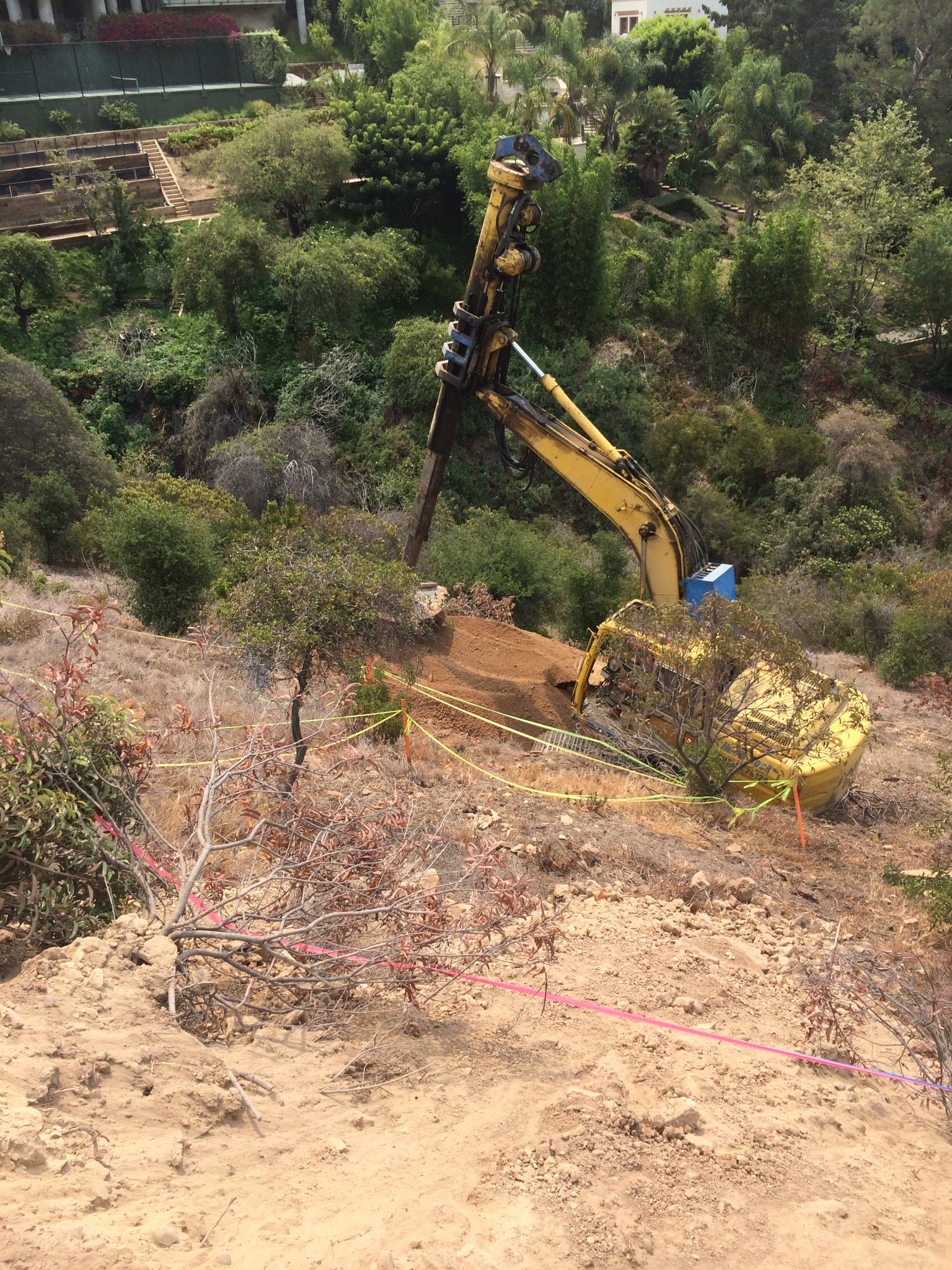
Start it before the architectural plans are final. The location of the system and the expansion area decides where the house, the ADU, the pool and the driveway can go. Seepage pit drilling also needs access for a drill rig, which is far easier before construction starts.
Where we fit
We disclose and outline everything about your septic system, then get it certified and working. J.F. Prieto Engineering Construction holds a California Class A General Engineering license (CA Lic #525452). We drill and set up the test holes and seepage pit test borings, provide the access and the water, and work alongside licensed engineers and geologists who run the tests and stamp the report. Your expediter files the plans with Public Health, or we file them when needed, and we install the approved system with our own crew. Call (800) 606-3880 or request a site visit, and you get our findings in writing.
Check the current County guidance or call the Onsite Wastewater Treatment Program at (626) 430-5380 before you commit to a plan.
Sources
- LA County Public Health, Requirements and Procedures for Conventional and Non-Conventional OWTS (updated 2025)
- LA County Local Agency Management Program (LAMP), May 2018
- State Water Board OWTS Policy (effective May 2013), definition of qualified professional