
Building Water Tanks In Place: How We Solve Hospital Site Constraints
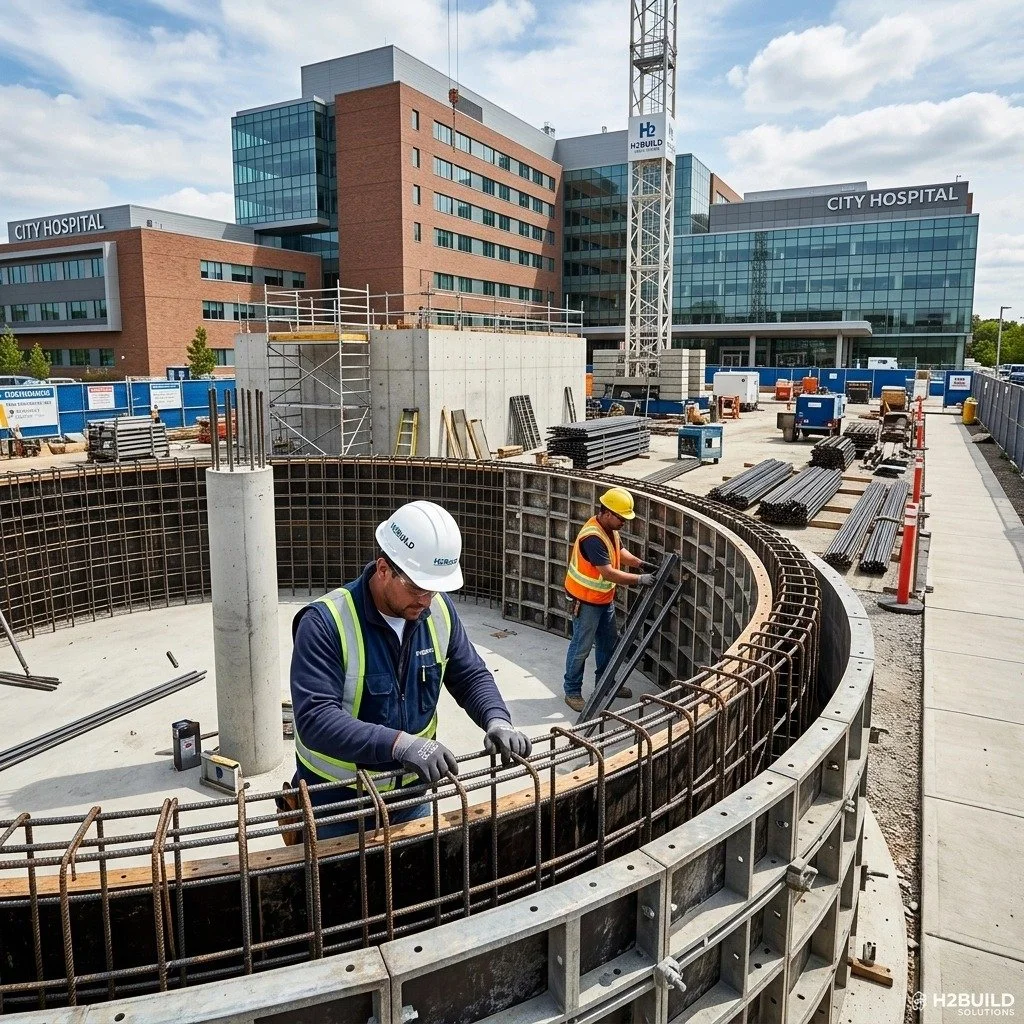
California’s healthcare infrastructure is under a microscope. Between NPC-5 requirements and the updated AFL 23-21 mandates, the pressure to secure 72-hour emergency water storage is no longer a distant deadline. It is a current operational hurdle.
For General Contractors managing hospital expansions or seismic retrofits in dense urban environments like Los Angeles or Orange County, the math rarely works in favor of prefabricated solutions. You are working with zero-lot-line constraints, active ambulance bays, and a subterranean web of legacy utilities. You cannot simply crane in a 100,000-gallon tank when the only available footprint is tucked behind an oxygen farm and under a parking structure.
This is where the decision to build water tanks in place becomes the only viable path forward. At Prieto Engineering, we’ve been handling these complex civil and structural scopes since 1978. We don’t just dig holes; we solve the logistical nightmares that stop projects in their tracks.
The Reality of NPC-5 and AFL 23-21 Compliance
The mandate is clear: hospitals must be self-sufficient for 72 hours. Under NPC-5, this includes potable water, wastewater holding, and cooling tower make-up water. The standard calculation: often 150 gallons of potable water per licensed bed: results in massive storage requirements.
When a facility has 300 or 400 beds, you are looking at footprints that prefab tanks simply cannot accommodate. AFL 23-21 further clarifies the necessity of these systems, ensuring that even if municipal lines fail during a seismic event, the facility remains operational.
The constraint isn’t just the volume; it’s the location. Most California hospitals are land-locked. Adding storage means going deep or fitting into “unusable” corners of the site. This requires a level of structural concrete precision that goes beyond standard utility work.
Why Prefabricated Tanks Fail in Urban Healthcare Sites
On a greenfield site, a prefab tank is a reasonable choice. On an active hospital campus, it is a logistical liability.
Delivery Access: Navigating a massive diameter tank through narrow hospital access roads often requires shutting down essential services.
Crane Reach: If the tank site is internal to the campus, the crane size required to set a prefab unit often exceeds the weight limits of existing underground structures or site paving.
Utility Interference: Prefab tanks have fixed dimensions. If you hit an undocumented 4-inch oxygen line or a high-voltage duct bank, you can’t “adjust” a prefab tank. You have to move the utilities: a process that adds months to a schedule.
Building in place allows the tank to conform to the site, not the other way around. We can design grade beams and structural walls to dodge existing infrastructure, maximizing every square inch of available space.
Structural Concrete Precision: The “Ground Down” Approach
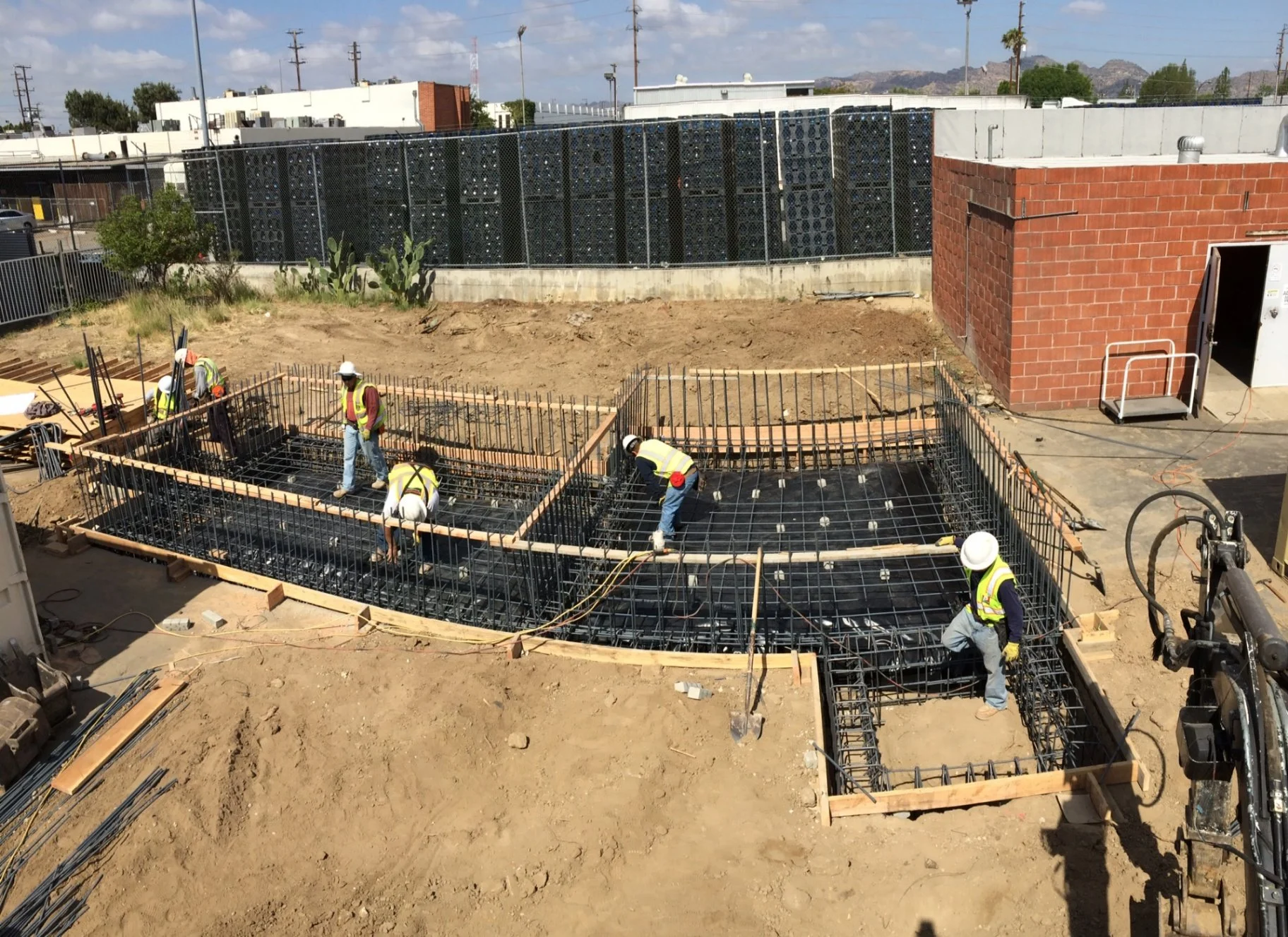
When you build a water tank in place for a hospital, you aren’t just pouring a box. You are building a mission-critical structural vessel that must meet HCAI (formerly OSHPD) standards.
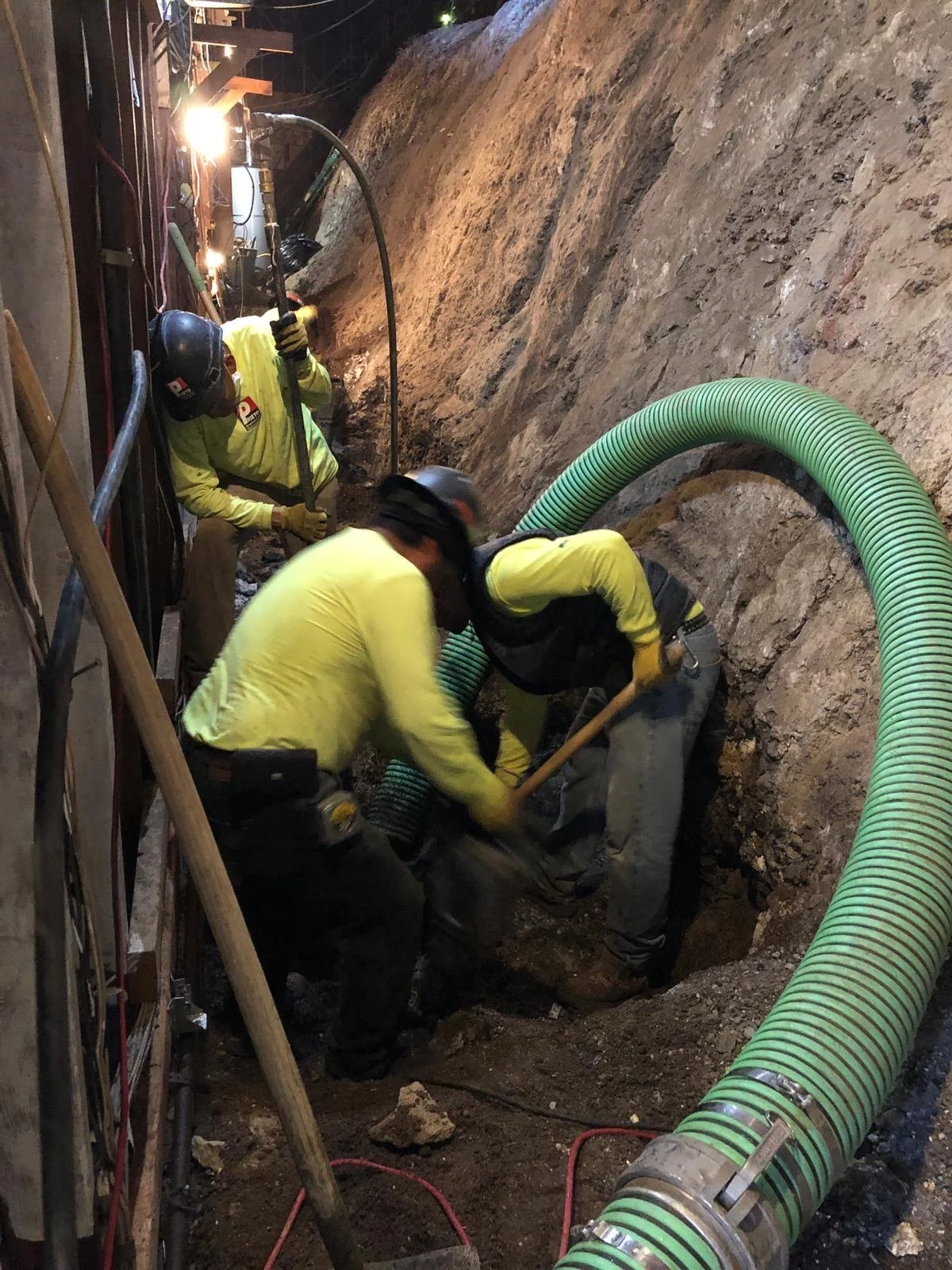
The process starts with precision excavation. In tight quarters, this often means shoring and bracing that would intimidate a standard utility sub. We utilize a mix of traditional excavation and hydrovac technology to expose existing lines without damage, ensuring the footprint for the new tank is clear.
Rebar and Grade Beams
Hospital water tanks are heavy. A full tank exerts massive hydrostatic pressure. We focus on heavy-duty rebar mats and integrated grade beams to ensure the vessel remains monolithic during a seismic event. This isn’t residential-grade work. The rebar schedules on these projects are dense, requiring ironworkers who understand how to navigate tight tolerances.
Waterproofing and Finishes
A tank is only as good as its seal. We utilize specific concrete additives and external membranes to ensure zero seepage. For potable water, the internal finish must meet strict health department standards. We handle the structural pour and the technical finishing as a single, coordinated scope.
The “Super Sub” Advantage: Reducing Coordination Friction
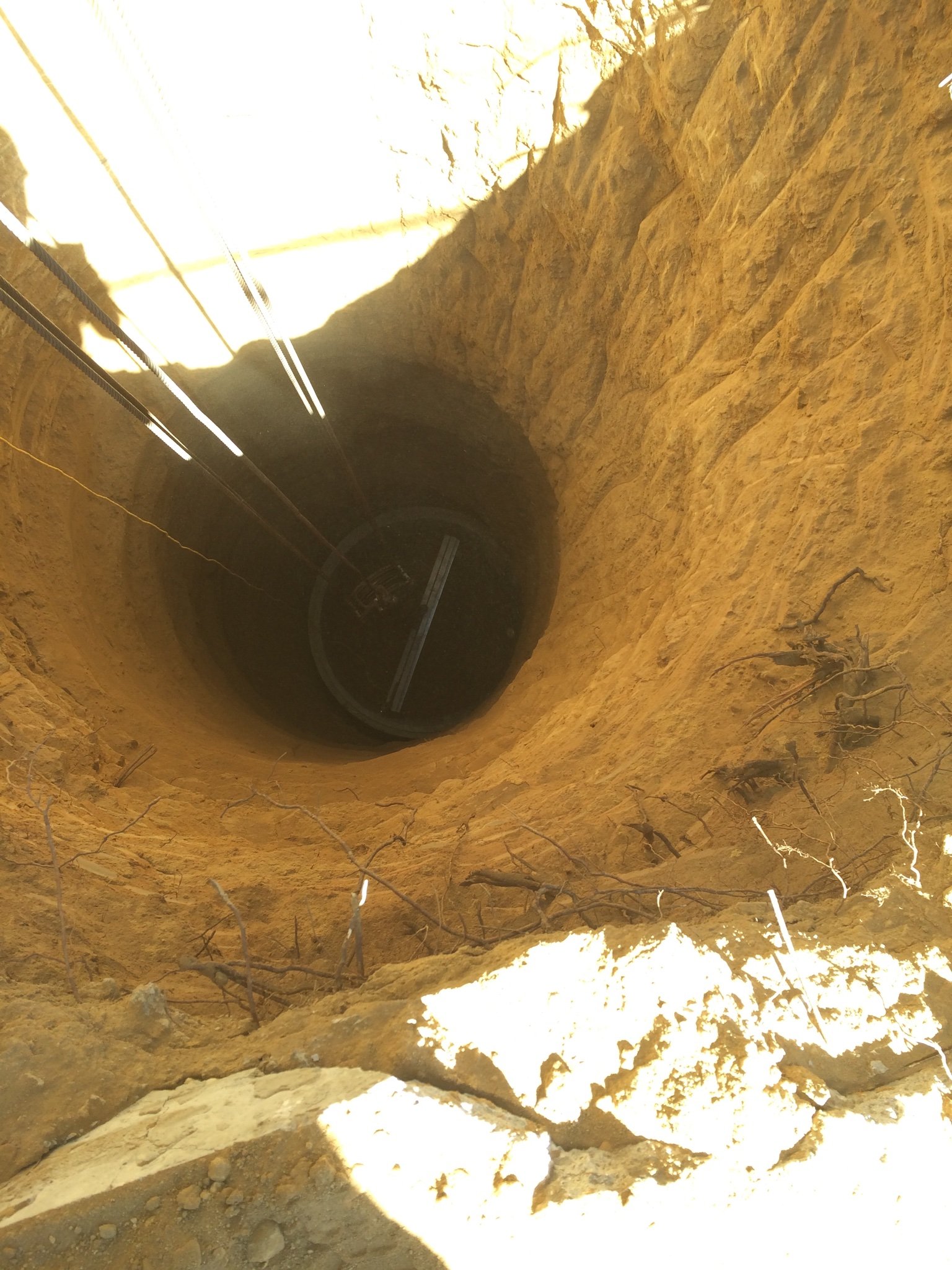
General Contractors are tired of managing five different subcontractors for one tank installation. You shouldn’t have to hire an excavator, a shoring company, a rebar sub, a concrete sub, and a utility plumber separately.
Prieto Engineering operates as a “Super Sub.” We self-perform the civil, structural, and underground utility components of the project.
By handling the entire scope, we eliminate the finger-pointing that happens when the excavator leaves the hole “close enough” but the concrete sub can’t fit their forms. We own the layout, we own the dig, and we own the pour. This reduces the GC’s management overhead and ensures that the technical requirements of NPC-5 are met without mid-project change orders stemming from “miscommunication” between trades.
Coordination with Active Facility Operations
A hospital never sleeps. You cannot shut down an ER entrance because you need to pour 200 yards of concrete.
Our team understands the nuances of working on active campuses. This means:
Vibration Monitoring: Ensuring our excavation doesn’t interfere with sensitive medical imaging equipment or surgical suites.
Dust Control: Maintaining strict infection control barriers when working near air intakes.
Traffic Management: Coordinating concrete pump placements so they don’t block life-safety vehicle paths.
We’ve been doing this since 1978. We know that in a hospital environment, the “how” we build is just as important as “what” we build.
Navigating the Subterranean Maze
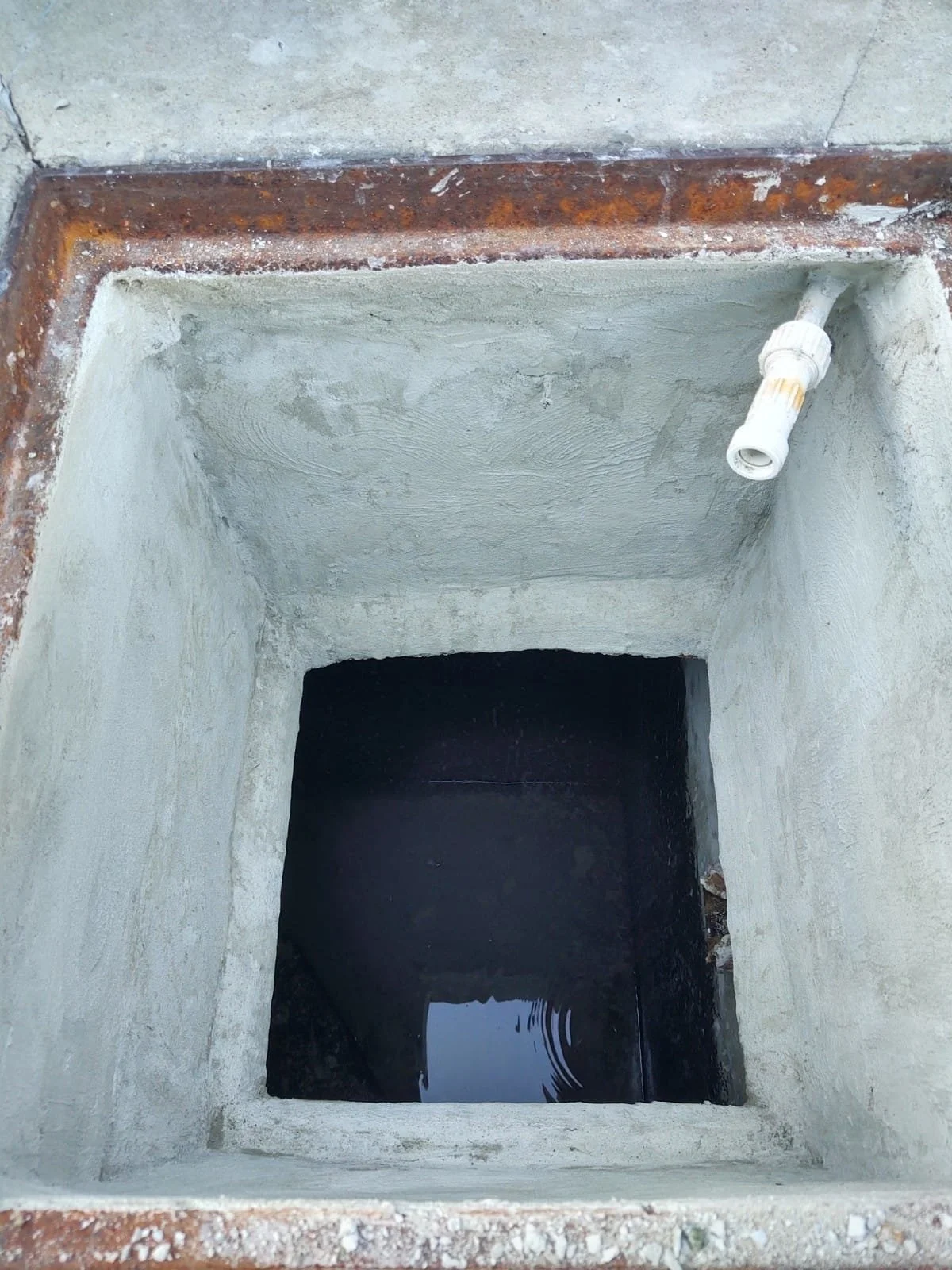
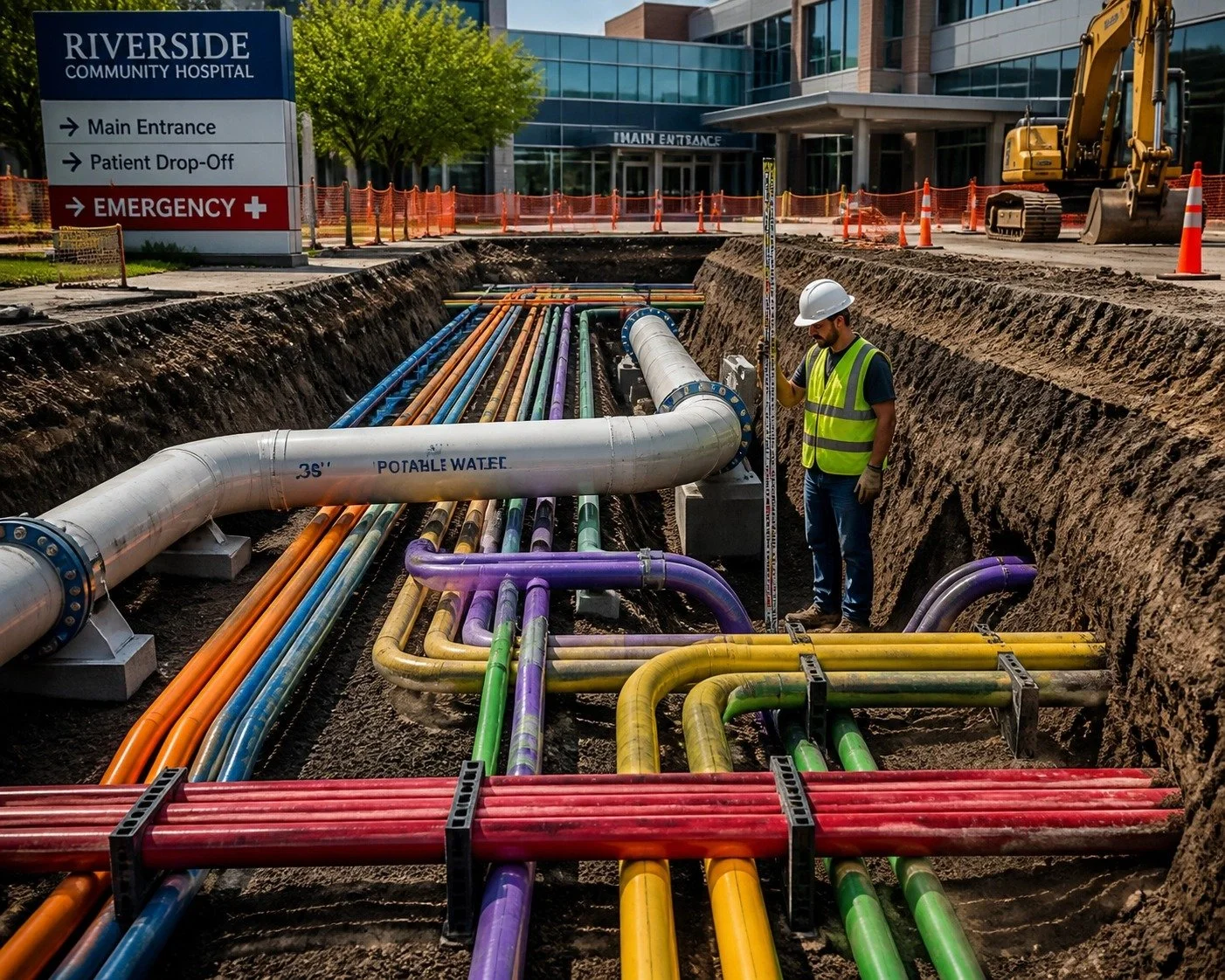
One of the biggest risks in building water tanks in place is what you find once you break the surface. Older California hospitals have layers of abandoned and active utilities that don’t always appear on as-builts.
When we encounter an unexpected duct bank or sewer main, our experience as a civil engineering contractor allows us to pivot. We don’t stop work to wait for a consultant to tell us how to move a pipe. We provide the solution, coordinate the relocation, and keep the tank construction moving.
Engineering for the Long Term
The goal of NPC-5 compliance isn’t just to check a box for a surveyor. It’s to ensure that during a major catastrophe, the hospital remains a place of refuge.
Building a water tank in place ensures that the structure is integrated into the site’s geology. Whether it’s a rectangular vault tucked under a new parking structure or a deep cylindrical tank in a small courtyard, the cast-in-place method provides a level of durability and site-specificity that prefab cannot match.
We focus on:
Seismic Anchoring: Ensuring the tank doesn’t shift or rupture during a 7.0 event.
Redundant Inlets/Outlets: Designing for easy maintenance without taking the entire storage system offline.
HCAI Alignment: Following the rigorous inspection and documentation process required for healthcare construction.
Why Prieto Engineering?
The “Super Sub” model only works if the subcontractor has the history to back it up. Since 1978, Prieto Engineering has focused on the difficult, the dirty, and the complex. We don’t chase the easy “cookie-cutter” jobs. We thrive on the projects where the GC is scratching their head, wondering how they are going to fit 72 hours of water storage into a space the size of a two-car garage.
We bring the equipment, the manpower, and the multi-disciplinary expertise to handle the job from the first bucket of dirt to the final concrete finish.
If your hospital project has complex civil or underground scope, reach out.
800-606-3880 or gprieto@PrietoEngineering.com